
If you're setting up your first tank, a test kit isn't optional — it's the one piece of gear you genuinely can't skip. Cycling a tank is defined by water chemistry, not by the calendar, so without a way to read ammonia, nitrite and nitrate you're flying blind through the most dangerous weeks of a tank's life. This is a tight, beginner-friendly shortlist of what's worth buying, and what isn't.
How to read this page
I keep recommendations short and honest rather than listing twenty products. Picks are based on what each kit measures, how accurate it is, cost per test, and how well it fits a beginner cycling a tank. Nothing here is sponsored or affiliate-linked yet — this is guidance first.
The short answer
For almost everyone, the best aquarium test kit is a liquid all-in-one freshwater kit that measures ammonia, nitrite, nitrate and pH. It's accurate, works out cheap per test, and covers every parameter you need to cycle a tank and keep it healthy afterwards. Test strips have their place for quick checks, but they shouldn't be your only tool while cycling.
The picks
Quick comparison
| Kit | Measures | Accuracy | Cost per test | Best for |
|---|---|---|---|---|
| API Freshwater Master Test Kit | Ammonia, nitrite, nitrate, pH | High | Low | The core kit for cycling + ongoing care |
| API Ammonia Test Kit | Ammonia only | High | Low | Budget start, or topping up a kit that lacks ammonia |
| Tetra EasyStrips 6-in-1 | Several params at once | Moderate | Moderate | Fast routine checks on an established tank |
| Seachem Ammonia Alert | Ammonia (continuous) | Indicative | One-off (lasts months) | Between-test early warning |
How I chose
Three things decide whether a test kit is worth it for a beginner:
It measures ammonia, nitrite and nitrate. These three are the whole story of a cycle — ammonia rises first, nitrite follows, and nitrate appears when the tank is working. A kit that skips ammonia is missing the most dangerous parameter. That's why an aquarium ammonia test kit — whether a standalone or the ammonia test built into an all-in-one — is the non-negotiable inclusion.
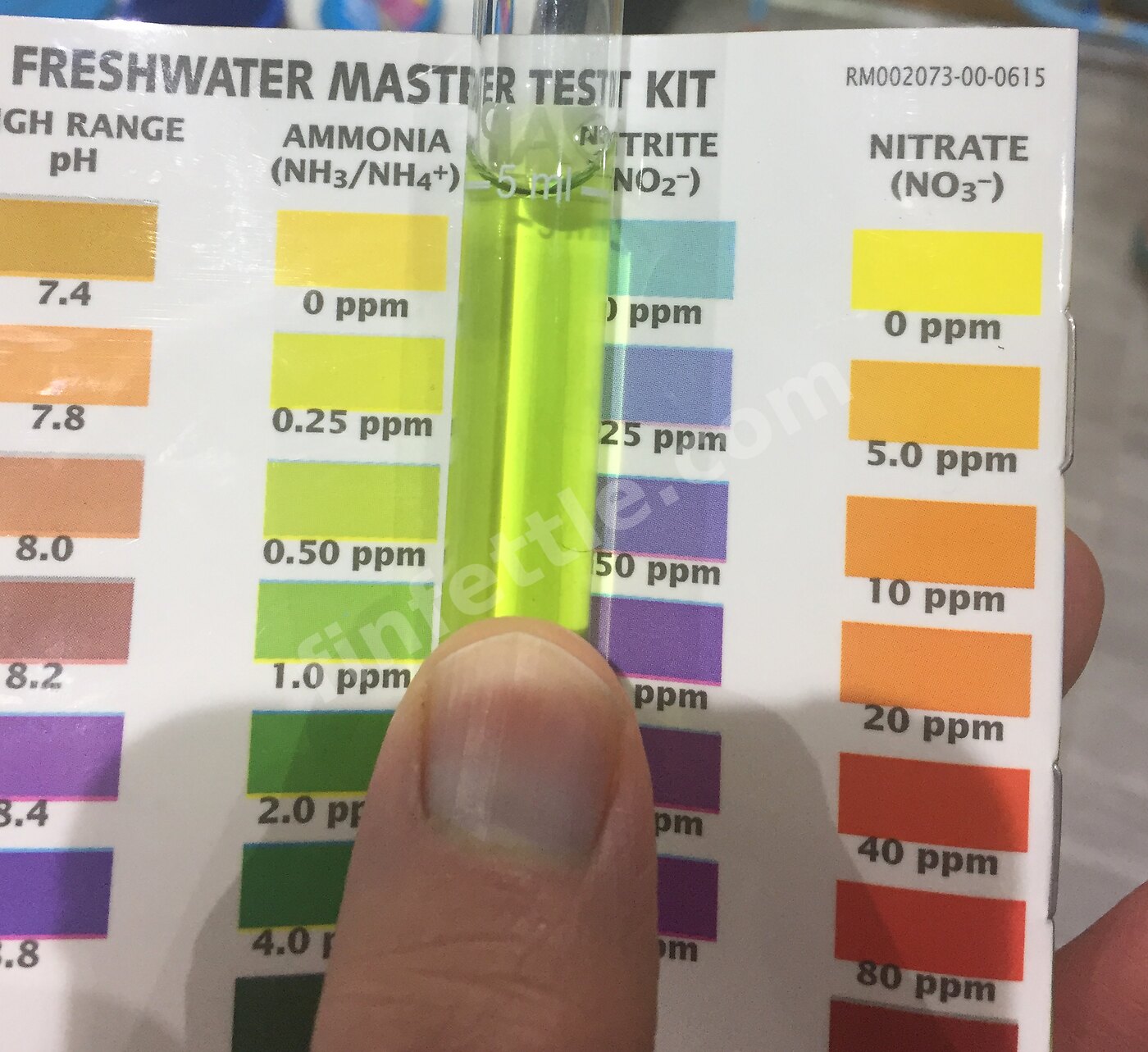
It's accurate enough to trust. As Aquarium Co-Op notes in its cycling guide, liquid reagent kits are the reliable standard for reading these parameters. When you're deciding whether nitrite is at 0.25 or 1.0 ppm, precision matters — that difference changes what you do next.
It includes pH. Texas A&M AgriLife Extension points out that ammonia's toxicity rises with pH, so knowing your pH tells you how seriously to take a given ammonia reading. An all-in-one kit gives you that context for free.
Free tool
A test kit tells you the concentration; the volume calculator tells you the volume. Together they're how you size a water change or a dose correctly — start both from your tank's real water volume.
Aquarium volume calculator →Each pick, honestly
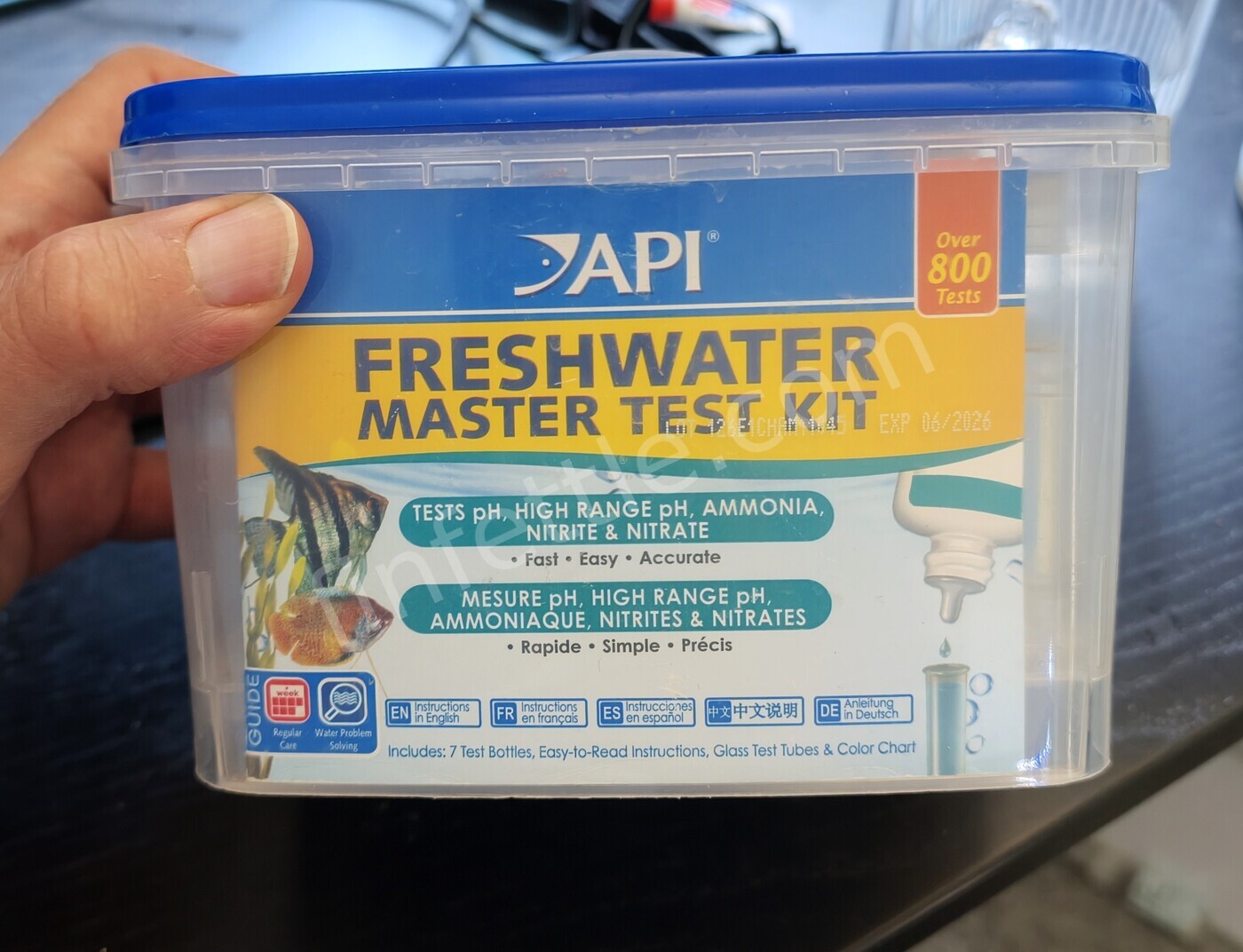
API Freshwater Master Test Kit — best overall. This is the kit I use. It covers ammonia, nitrite, nitrate and pH in one box, reads accurately, and costs little per test, which is why it's the default recommendation across the hobby. Cons: the multi-step liquid procedure takes a few minutes and colour-matching against the chart in poor light isn't always easy. Worth it — this is the kit that actually gets you through a cycle.
API Ammonia Test Kit — best budget / add-on. If money is tight or your main kit lacks ammonia, this covers the single most important parameter for a new tank. Cons: it only does ammonia, so you'll still want nitrite and nitrate coverage before long.
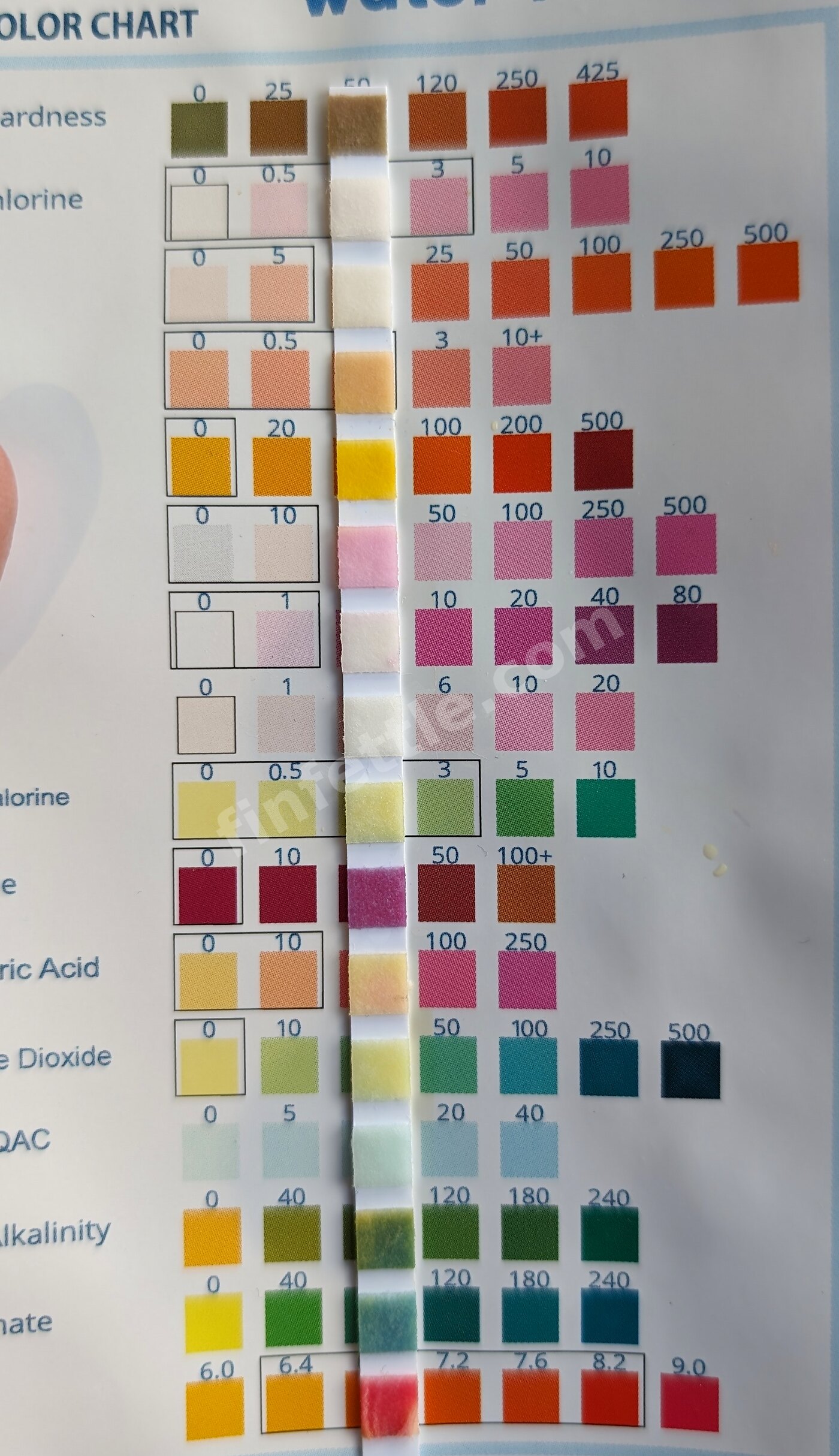
Tetra EasyStrips 6-in-1 — fastest checks. Dip, wait, compare — seconds, not minutes. Great for a quick weekly glance on an established tank. Cons: less precise than liquid, and they degrade if the tub is left open or stored damp. Don't rely on strips alone while cycling.
Seachem Ammonia Alert — early warning. A small sensor that stays in the tank and changes colour if ammonia appears, giving you a heads-up between tests. Cons: indicative rather than precise, and it only watches ammonia. A nice backstop, not a replacement for a real kit.
What you can skip
For a freshwater tank you don't need a saltwater or reef test kit, a KH/GH kit on day one (handy later for water stability, not urgent now), or a drawer of single-parameter specialist reagents. A digital/electronic tester is also overkill for most freshwater keepers — a liquid kit is cheaper and plenty accurate. One thing that's easy to miss: check the expiry date. Reagents and strips degrade over time, and an out-of-date kit gives you readings you can't trust — which is worse than no kit at all when you're relying on them to keep fish alive.
Put it to work
A test kit only helps if you know what the numbers mean. Start with how to cycle an aquarium for the full method, and if your readings are already off, new tank syndrome and ammonia poisoning walk through what to do about it.