
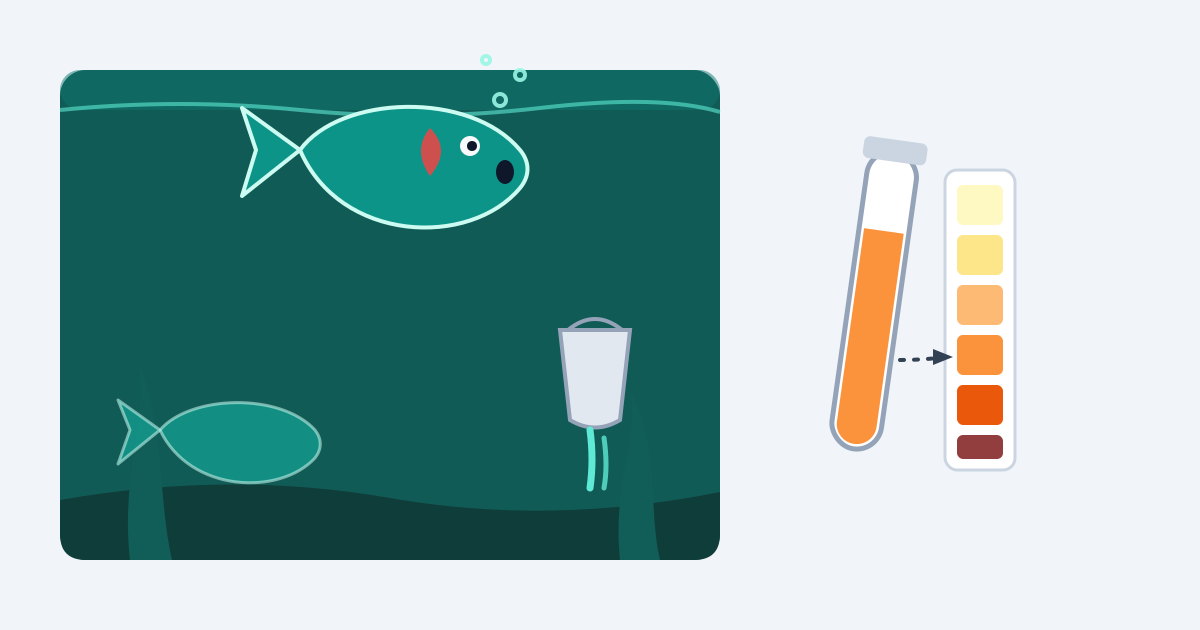
If fish in a newish tank are gasping at the surface, sitting listlessly, showing red or inflamed gills, or dying for no visible reason, ammonia poisoning is one of the first things to rule out. It's among the most common killers of beginner fish, and because ammonia is invisible in water, it's easy to miss until a test kit reveals it.
The immediate move is simple: if a test confirms ammonia, do a large dechlorinated water change now to dilute it, cut back feeding, and keep testing daily. The rest of this page explains how to recognise ammonia poisoning, why it happens, and how to stop it coming back.
Is it actually ammonia poisoning?
Ammonia poisoning shows up as a cluster of stress signs rather than one tell-tale mark:
- Gasping at the surface or near filter outflow (ammonia damages gills, so oxygen uptake suffers).
- Red, purple or inflamed gills; sometimes red streaks or patches on the body or fins.
- Lethargy — sitting on the bottom, clamped fins, hiding.
- Loss of appetite.
- In a new tank, fish dying with no spots, fuzz or obvious disease.
The context matters as much as the symptoms. If the tank is new, was recently overstocked, or you've had a filter problem, ammonia is a prime suspect. The only way to be sure is to test — ammonia doesn't announce itself any other way. Keeping a betta? See the betta-specific new tank syndrome guide for signs and timing particular to bettas.
Total ammonia vs. the toxic form
Your test kit measures total ammonia. But only part of that — the "un-ionised" fraction — is the highly toxic form, and its proportion rises with higher pH and temperature. University of Florida and Texas A&M Extension both note that the same total reading is more dangerous in warm, alkaline water. Practically: treat any detectable ammonia as something to fix, and be extra cautious in a warm, high-pH tank. My aquarium ammonia guide explains what a reading means in more detail.
Check the water first — this is the diagnosis
For ammonia poisoning, testing is the diagnosis. Use a liquid kit to check ammonia, nitrite and nitrate:
- Ammonia above 0 ppm → ammonia poisoning is in play.
- Nitrite also up → the tank is mid-cycle; see new tank syndrome.
- Both 0, nitrate present → the tank is cycled and ammonia isn't your problem; look elsewhere.
Free tool
Water changes work by dilution, so knowing your tank's true water volume matters. This calculator gives you the real figure after glass, substrate and decor — so a '50% change' is actually 50%.
Aquarium volume calculator →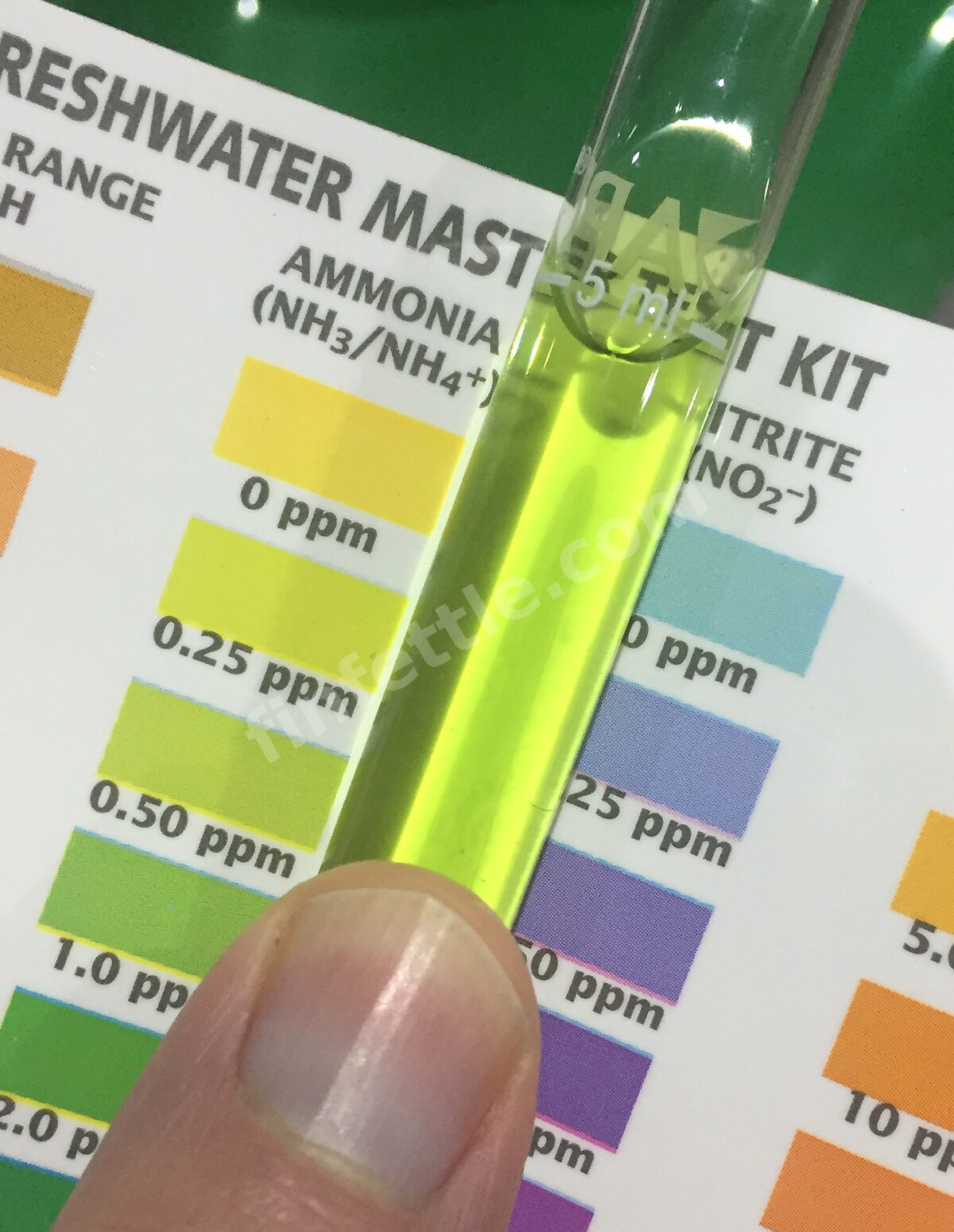
What to do next (husbandry-first)
The plan is about removing ammonia and protecting the fish while the biological filter catches up — not medicating.
Do a large water change immediately. Change 25–50% with dechlorinated, temperature-matched water. This dilutes the ammonia straight away and is the single most effective thing you can do. Repeat if the reading is still high after testing.
Always dechlorinate. Tap-water chlorine and chloramine harm fish and kill the beneficial bacteria you need. A conditioner that also detoxifies ammonia gives you a bit of breathing room between changes — useful, but not a substitute for the water change itself.
Cut feeding right back. Less food means less waste means less ammonia. Feeding lightly for a couple of weeks won't harm healthy fish.
Stop adding fish, and don't clean the filter. More fish means more ammonia; deep-cleaning the filter removes the bacteria that will eventually solve the problem.
Test daily. Keep ammonia and nitrite below about 0.25 ppm with water changes until the tank finishes cycling and holds them at 0 on its own.
When it's beyond a water change
Ammonia burns gills, and severe or prolonged exposure causes damage that water changes alone won't reverse. If fish are collapsing quickly, bleeding from the gills, or not improving despite clean water, get them out of the toxic water: the best move is into mature, cycled water — a spare tank if you run one, a friend in the hobby, or your local shop (many will hold or rescue a struggling fish). This page is educational and husbandry-first, not a diagnosis.
How to prevent it
Ammonia poisoning is really a cycling problem, so the prevention is the same: cycle the tank properly. Whether you go fishless or run a carefully-managed fish-in cycle (a few hardy fish, daily testing, water changes as needed), the goal is the same — enough filter bacteria that the ammonia your fish produce is processed almost as fast as it appears. My cycling guide covers the method, and seeding the filter with mature media from an established tank is the fastest head start. A bottled bacteria starter such as Fluval Cycle can help too, though it's not a substitute for testing. Running a fishless cycle instead? Dr Tim's Ammonia covers how much to dose and what to expect as the readings move. After that, stock gradually and don't overfeed, and you shouldn't see ammonia again.