
Cloudy aquarium water looks like something has gone badly wrong, but most of the time it hasn't. A murky fish tank in its first weeks is usually one of two harmless things — a bacterial bloom or leftover sediment — and neither is an emergency. The mistake people make is reacting to how the water looks instead of checking what the water is.
Cloudy fish tank water is one of the most-asked new-keeper questions, and the answer starts the same way every time: test your ammonia and nitrite. If both read 0 ppm, the cloudiness is almost certainly cosmetic and safe to wait out. If either is elevated, the haze is a sideshow — the water quality is the real issue, and that's covered in ammonia poisoning and new tank syndrome.
The one test that decides everything
As Texas A&M AgriLife Extension notes, ammonia is toxic to fish at very low levels and is invisible in water — you can't judge it by eye. A liquid ammonia and nitrite test is what separates "harmless cloudy water" from "dangerous water that happens to be cloudy."
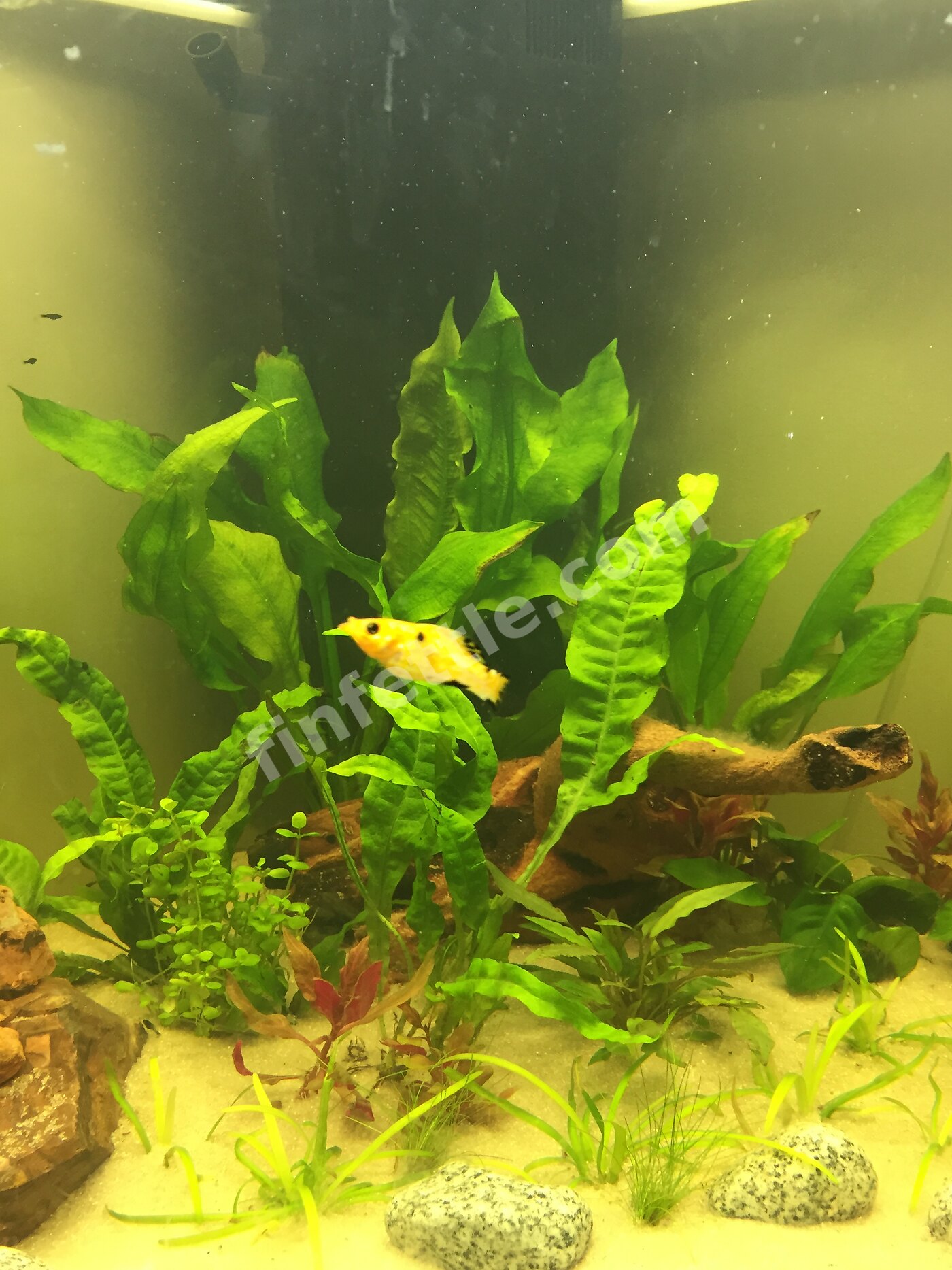
Is it actually a bacterial bloom? How to tell by colour
The colour and timing of the haze usually identify the cause.
| What you see | Likely cause | Is it harmful? | The fix |
|---|---|---|---|
| Milky / white, like diluted milk (new tank) | Bacterial bloom | Almost always harmless | Wait 1–2 weeks; don't overclean |
| Grey, gritty, right after setup | Fine sediment / substrate dust | Harmless | Rinse substrate, let the filter run |
| Green tint | Algae bloom | Harmless but persistent | Less light, fewer nutrients |
| Any haze with high ammonia/nitrite | Water-quality problem | Dangerous | Water changes; see below |
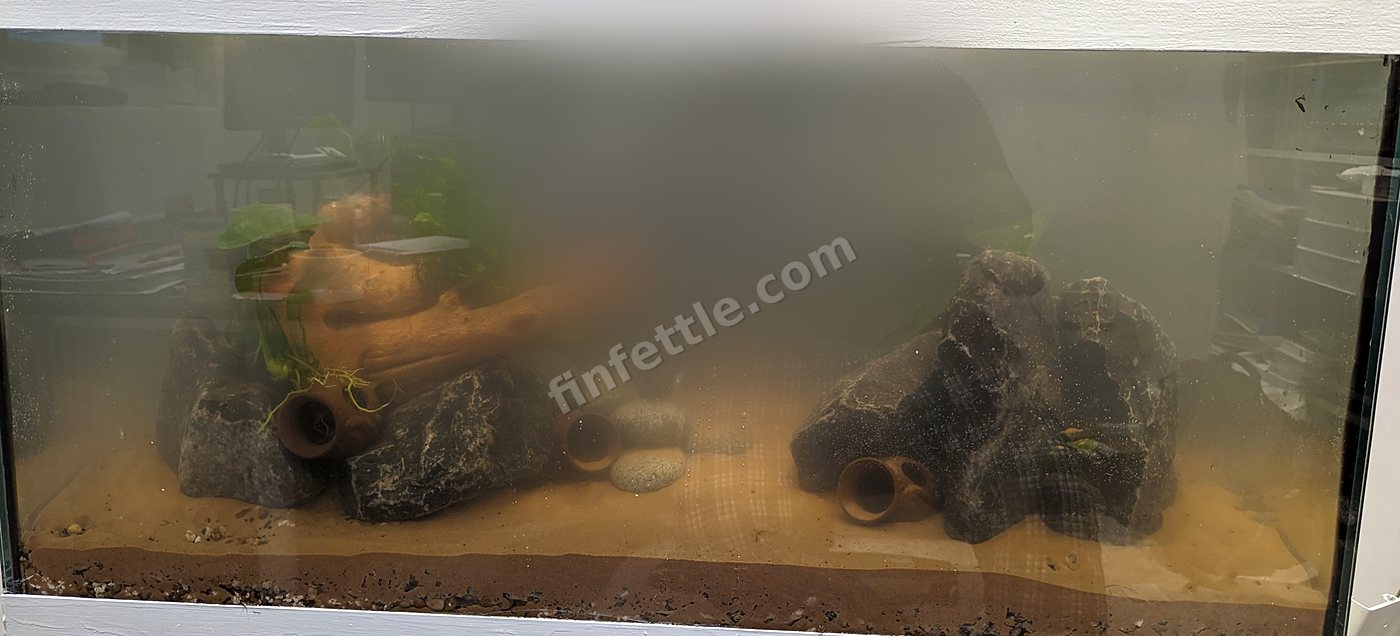
A hazy aquarium water that's milky-white and showed up a day or more after setting up is the textbook bacterial bloom — a burst of free-floating bacteria feeding on dissolved nutrients. My dedicated bacterial bloom guide goes deeper, but the headline is that it's self-limiting and clears on its own.
Check water quality first (husbandry-first)
This is the step that actually protects your fish. Test ammonia, nitrite and nitrate with a liquid kit. Many problems that get blamed on "cloudy water" are really the invisible ammonia or nitrite spike of a tank that hasn't finished cycling — the cloudiness just happens to appear at the same time. If your readings aren't zero, follow the water-change plan in new tank syndrome rather than chasing the haze.
Free tool
If a test says you do need water changes, size them against what the tank actually holds — usually a fair bit less than the sticker on the box.
Aquarium volume calculator →What to do next — matched to the cause
Once you know what you're dealing with:
Bacterial bloom (white/milky). Do very little. Feed lightly, don't deep-clean the filter, keep the tank well aerated (a bloom uses oxygen), and give it one to two weeks. Counterintuitively, big water changes often prolong it. This is the "cloudy water fix" that most surprises beginners — the fastest safe route is patience, not scrubbing.
Sediment (grey/gritty). Let the filter do its job; it'll polish the water over hours. If it persists, gently rinse the substrate and check your filter's mechanical media.
Algae (green). Cut light down to 6–8 hours a day, don't overfeed, and reduce nutrients. This one won't simply time out — it needs the cause removed.
High ammonia or nitrite (any colour). This is the only genuinely urgent case. Do a 25–50% dechlorinated water change now, cut feeding, and keep testing daily — the full plan is in new tank syndrome.
Why 'aquarium looks cloudy' so often means 'new tank'
Cloudiness clusters in the first few weeks because that's when nutrients are highest and the biological filter is weakest. If your tank is brand new, read the cycling guide alongside this — clearing the water and finishing the cycle are the same project.
When to worry
Cloudy water on its own rarely warrants alarm. Escalate your attention when the cloudiness comes with sick fish — gasping, clamped fins, lethargy — or with a test reading above 0 for ammonia or nitrite. In those cases the water chemistry, not the appearance, is what needs fixing, and fish showing distress should be your priority over the look of the tank.