
Small white spots scattered across your fish — like someone shook salt over them — are almost always ich, also called ick or white spot disease. It's one of the most common aquarium diseases, it's treatable, but it's also a genuine emergency: left alone, ich can wipe out a tank in days. (You'll see it searched as ick on fish or white spot disease fish, and people often ask for an ich cure — as you'll see, it's a repeated process, not a single dose.)
Before you reach for a bottle, do three quick things: confirm it's actually ich (a couple of things mimic it), test your water (stress from bad water is what lets ich take hold), then start a proper repeated treatment. This page walks through each step; the full treatment guide has the detailed plan.
Is it actually ich?
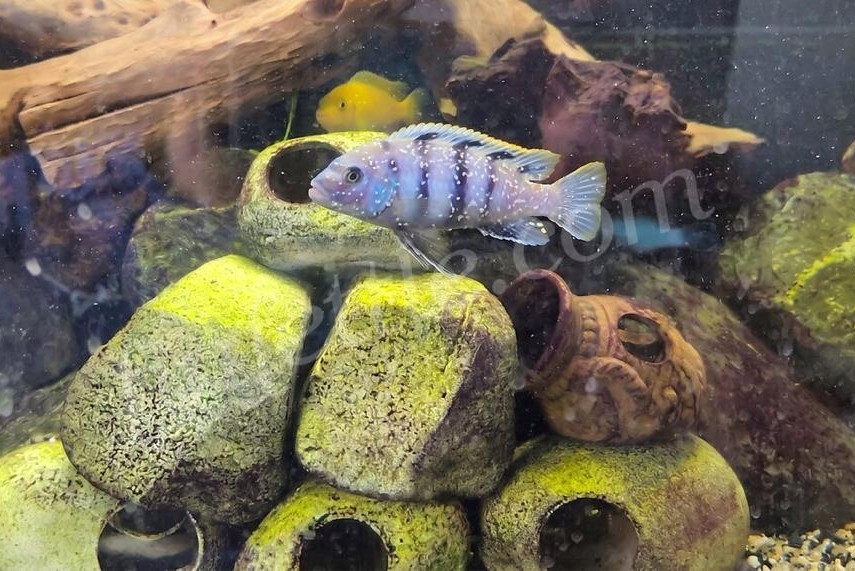
Ich has a distinctive look. The spots are raised, white, and roughly the size of grains of salt or sugar, dotted individually over the body, fins and tail. You can usually count them. Alongside the spots, infected fish often flash — darting and scraping against decor or the substrate — and may clamp their fins, hide, or go off their food. Sometimes the flashing and rapid gill movement come before any visible spots, especially if the parasite is mostly on the gills.
A few things get mistaken for ich:
- Velvet — a much finer gold, yellow or rust-coloured dust rather than distinct spots. It's more aggressive and needs a different treatment. If the spots are too numerous or too fine to count, read ich vs velvet before treating.
- Fungus — fluffy, cotton-wool tufts, usually on a wound or the mouth, not evenly scattered pinpoints.
- Breeding tubercles — on some species (like male goldfish in breeding condition), harmless white bumps appear on the gill covers and pectoral fins. These are normal and come and go with the season.
Why a single treatment isn't enough
Ich has three life stages, and only one of them can be killed by treatment. The University of Florida notes that the feeding stage burrowed into your fish's skin and the reproductive cyst stage in the gravel are both shielded from chemicals — only the free-swimming stage, hunting for a host, is exposed. That's why every effective ich treatment is repeated over several days: you're picking off each new wave as it emerges.
Check your water first
Ich takes hold most easily on fish that are already stressed, and the most common stressor is water quality. Before and during treatment, test ammonia, nitrite, nitrate and temperature with a reliable kit — see my best aquarium test kits. Any ammonia or nitrite above 0 ppm is its own problem and makes the fish less able to fight off the parasite.
Getting your dose or salt level right also depends on knowing how much water is actually in the tank — not the "20 gallon" printed on the box, but what's really in there once the substrate and rockwork have taken their share.
Free tool
Work out your tank's true water volume before you dose anything — an overdose is dangerous and an underdose won't clear the ich.
Aquarium volume calculator →What to do next — the plan
The approach is to make the water hostile to the free-swimming parasite, repeatedly, until the whole life cycle is broken — while keeping your fish as unstressed as possible. In short:
- Raise the temperature gradually toward about 86°F (30°C) if your fish tolerate it, adding extra aeration. Warmth speeds the parasite's cycle so it reaches the vulnerable, treatable stage faster — it's an accelerator, not a cure on its own. (Go gently with coldwater fish like goldfish — see the goldfish ich page.)
- Use a dedicated ich medication at its label dose, repeated as directed. In the US the main options are Ich-X and Faunamor (the first FDA-legal ich drug); in the UK, eSHa EXIT and other Schedule-6-exempt products are the route to use — see my US or UK picks, and the how-to guide, for what to use and how.
- Keep the water clean — gravel-vac and do the water changes your treatment calls for, which physically removes the cyst stage from the substrate.
- Keep treating for about three days after the last spot vanishes. This is the step people skip, and it's why ich comes back.
Aquarium salt can support treatment, but it comes with real caveats — some tankmates and plants don't tolerate it — so I cover exact dosing and when to skip it in my aquarium salt guide rather than reaching for it by default.
When it's not improving
If fish are dying despite correct treatment, are struggling to breathe (ich on the gills is especially dangerous and may show no body spots), or you're not sure whether it's ich or velvet, don't just keep dosing blindly. Move badly affected fish to a mature, cycled tank if you have one — your own spare, an experienced fishkeeping friend's, or the aquarium shop you bought them from. This page is educational and husbandry-first, not a diagnosis.
Species notes
Ich behaves and is treated slightly differently depending on the fish. The two most common searches — and the two most common patients — are bettas and goldfish:
- Betta ich — small warm-water tanks, dosing accuracy matters, and bettas are often kept alone (which simplifies treatment).
- Goldfish ich — coldwater fish with a big waste load, often housed with scaleless tankmates, so heat and salt both need more care.
FAQ
The questions above cover the fastest ways to tell ich apart, whether it's dangerous, and how long treatment takes. For the step-by-step protocol — temperatures, doses, timing and water changes — head to how to treat ich.