
When your fish has ich, you want the thing that actually works, without guesswork. In the UK that means a dedicated antiparasitic medication — sold over the counter under the VMD's Schedule 6 exemption, not a full veterinary prescription — dosed to your real water volume and repeated across the parasite's life cycle. Whatever you searched — ich treatment uk, whitespot treatment uk, or just the best fish disease treatment uk shops actually stock — this is my honest, tight shortlist of what's worth buying here, and what to skip.
How to read this page
This is guidance first — recommendations are based on what the products contain, how they're dosed, and what's legally sold here. Nothing here is sponsored. Doses quoted are transcribed from manufacturers' own labels and listings and cited; always follow the current bottle label and dose from your tank's true volume.
The short answer
For most UK freshwater keepers, the best ich treatment is a dedicated malachite-green-based medication — I recommend eSHa EXIT first because it's the one used, start to finish, on the outbreak pictured above. NT Labs Anti White Spot & Fungus, King British White Spot Control and Waterlife Protozin are all equally legitimate, widely-stocked alternatives built on the same active-ingredient family. All four fall under the VMD's Schedule 6 exemption for small pet animals — the standard route to market for aquarium medicines here, not a grey area. Aquarium salt is a support, not the core treatment, and antibiotics have no place in any of this.
Reading this from elsewhere in the EU?
This page is written around the UK market, but the rule behind it isn't UK-only — the VMD's Schedule 6 exemption is built on the same EU veterinary-medicine framework that still applies across the bloc. These products are commonly stocked by EU aquatics retailers too. I haven't individually checked every member state's rules, so confirm availability where you are before ordering, but there's no reason to assume this list is UK-exclusive.
My experience treating ich
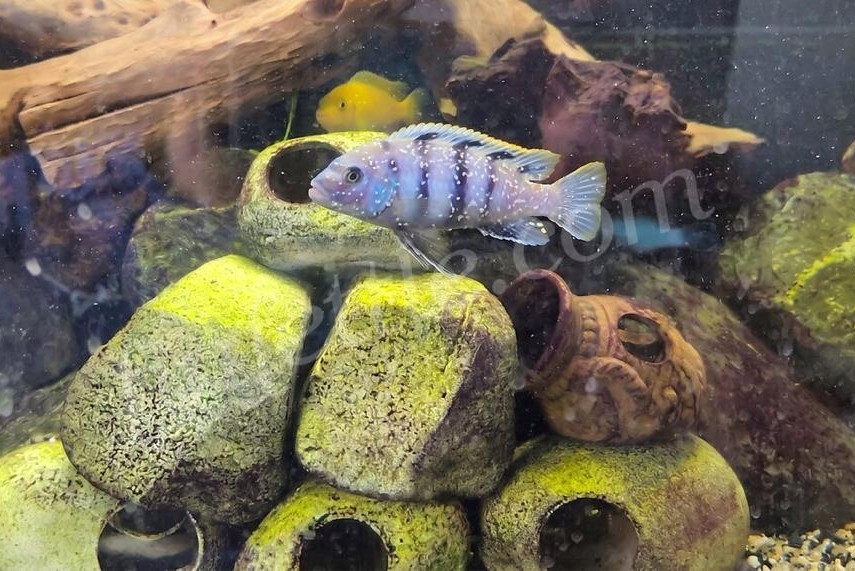
I keep mbuna, and when ich showed up on one of them — the fish pictured at the top of this page — I didn't reach for a home remedy. I treated the whole tank with eSHa EXIT, dosed from the bottle to the tank's actual volume (not a guess — I measured it first), and repeated the course as the label describes. The white spots cleared fully over the course, and I haven't had a repeat outbreak since.
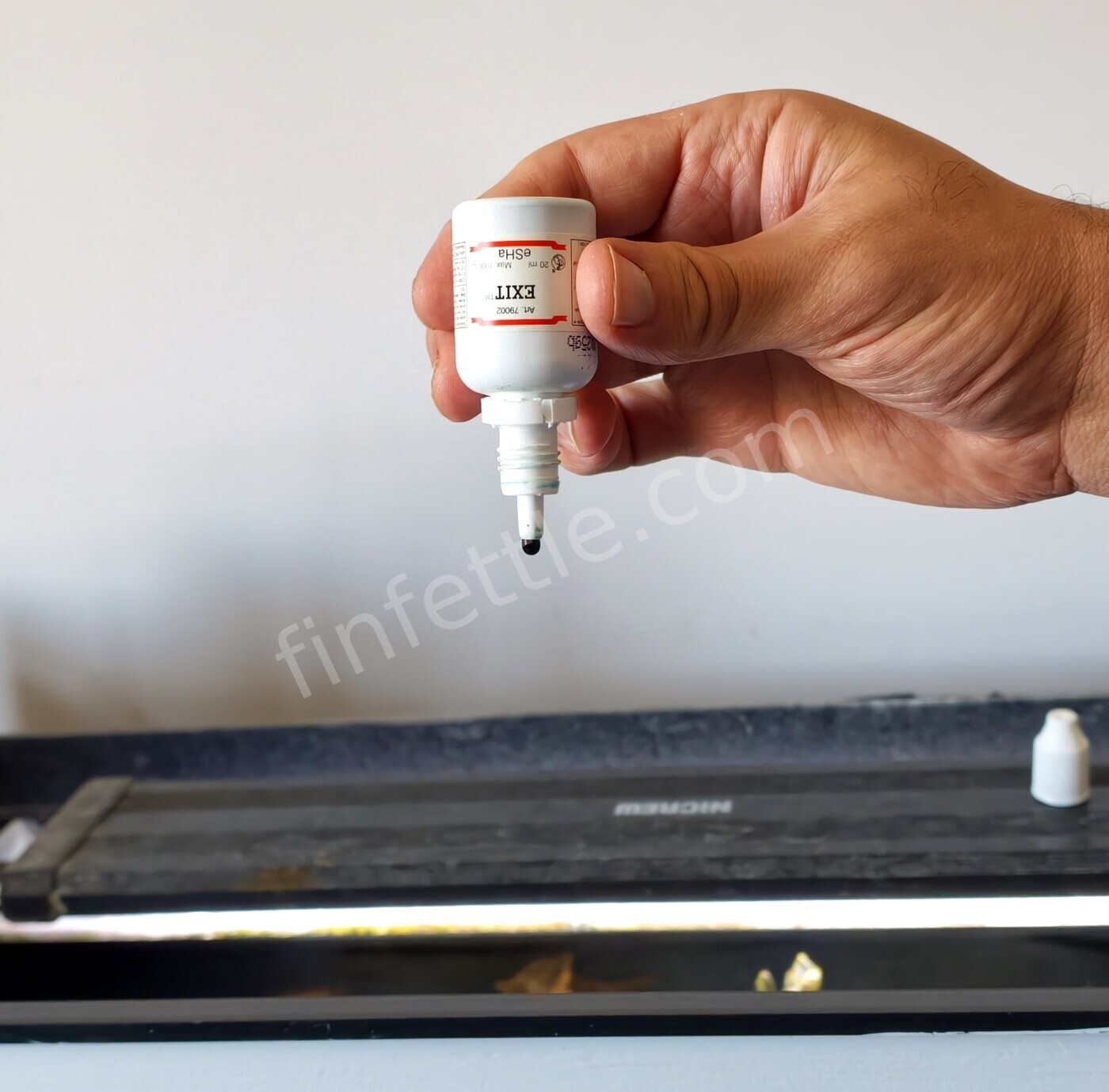
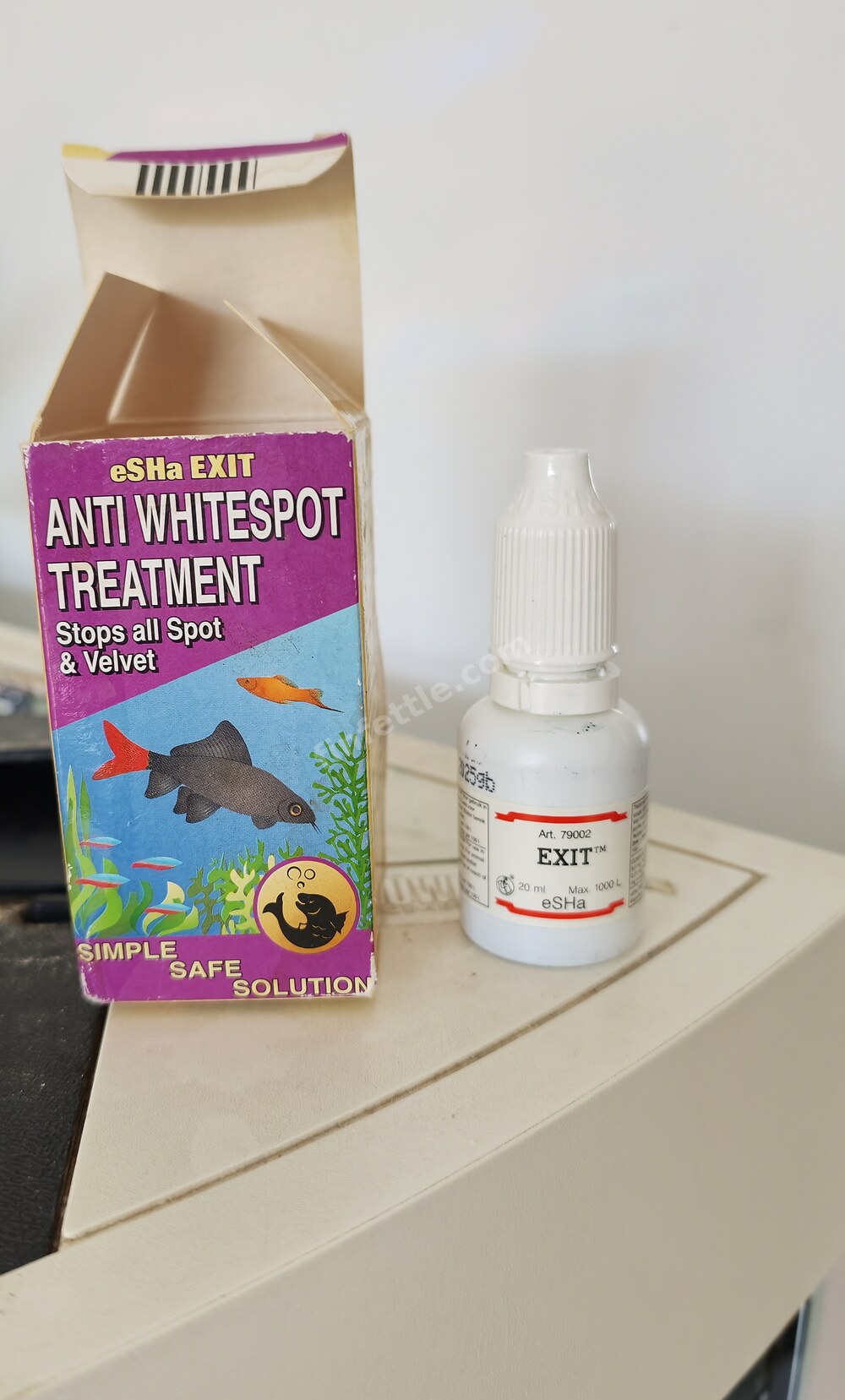
That's the whole method, and it's the same method behind every pick on this page: a dedicated antiparasitic, dosed to real volume, repeated across the full life cycle of the parasite. The brand matters less than getting those basics right.
The picks
Quick comparison
| Treatment | What it is | How it's dosed | Best for |
|---|---|---|---|
| eSHa EXIT | Methylene blue + malachite green oxalate | By drops (20 drops = 1 mL) to tank volume; standard 3-day dose per eSHa's own calculator | The dependable, founder-tested default |
| NT Labs Anti White Spot & Fungus | Malachite green + formaldehyde | 7-day course, dosed to tank volume per label | Easiest to find at a local aquatics shop |
| King British White Spot Control (WS3) | Malachite green + acriflavine + quinine sulphate | 1 mL per 90 L (20 gal), repeated every 48 hours until 48 hours after spots clear | Clearest published dose; budget-friendly |
| Waterlife Protozin | Malachite green-based | 4 doses over a 6-day course (days 1, 2, 3, then 6) | A fixed schedule rather than a "repeat until clear" approach |
How I chose
Three things separate a good UK ich treatment from a bad bet:
It's legally sold here, on the right basis. UK vet-medicine advertising is regulated, but ordinary aquarium treatments like these don't need full veterinary marketing authorisation — they qualify under the VMD's Schedule 6 "exemption for small pet animals", which covers water-dosed, non-antibiotic medicines for pets including aquarium fish. All four picks here use active ingredients (malachite green, formaldehyde, acriflavine, quinine sulphate, methylene blue) that appear on the VMD's own current Schedule 6 approved-substances table for aquarium animals dosed via water, and all are sold openly by mainstream UK aquatics retailers.
It's dosed by volume and repeated. Only the free-swimming stage of ich can be killed, so any treatment has to be applied across the parasite's whole life cycle, not as a single dose. Products with a clear per-volume label dose — King British's 1 mL per 90 L is the clearest example — make that easy to get right.
It's honest about collateral damage. I don't lead with salt here for the same reason the US version of this page doesn't: it harms scaleless fish and plants, so it isn't the best default for a typical community tank — see my aquarium salt guide for exact dosing and who should skip it.
Free tool
Every option here is dosed by actual water volume — calculate the real number before you measure a dose, so a bottle lasts and the dose is safe.
Aquarium volume calculator →Each pick, honestly
eSHa EXIT — best overall. A methylene-blue and malachite-green-oxalate anti-whitespot treatment, dosed by drops via a pipette (20 drops = 1 mL) and eSHa's own dosage calculator for a standard 3-day course. This is the exact product used on the outbreak pictured above. Cons: like every malachite-green product it stains, and you should remove carbon filtration before dosing.
NT Labs Anti White Spot & Fungus. A malachite green and formaldehyde treatment sold as a 7-day course, widely available at UK aquatics shops and online. Its own listing describes it as non-toxic to shrimp and snails, which is worth checking against your own tank if you keep invertebrates. Cons: as with any formaldehyde-based product, dose carefully and follow the label's course length exactly.
King British White Spot Control (WS3). Malachite green, acriflavine and quinine sulphate, with the clearest published dose of the four: 1 mL per 90 L (20 gal), repeated every 48 hours until 48 hours after the spots disappear, with a 10% water change after five doses. Cons: the label calls for a half-dose around sharks, loaches and other sensitive or lightly-scaled fish — check your stock list first.
Waterlife Protozin. A malachite-green-based treatment applied on a fixed schedule — days 1, 2 and 3, then a final preventative dose on day 6 — rather than a "repeat until clear" approach. That structure can suit keepers who'd rather follow a set calendar than judge when spots are fully gone. Cons: less flexible if an outbreak needs longer than the built-in schedule allows.
What to skip
- Antibiotics. Ich is a parasite, not a bacterial infection, so antibiotics do nothing for it — and UK vet-medicine advertising rules don't cover marketing them for this anyway. Use a proper antiparasitic instead.
- Marine "ich" treatments in a freshwater tank — marine white spot is a different parasite and a different product.
- Stacking medications. One correct antiparasitic, dosed to volume and repeated, clears ich. Combining products (including running salt alongside a malachite-green treatment) raises the risk to your fish without clearing the parasite any faster.
If you're in the US
Ingredients and legal status differ by country — see my US ich treatment shortlist for Ich-X, Faunamor and the FDA-legal options available there.
Put it to work
Buying the right bottle is step one; using it correctly is what actually cures the fish. Start with how to treat ich for the full protocol, confirm you're dealing with ich and not velvet, and if you've got a betta specifically, see betta ich.