
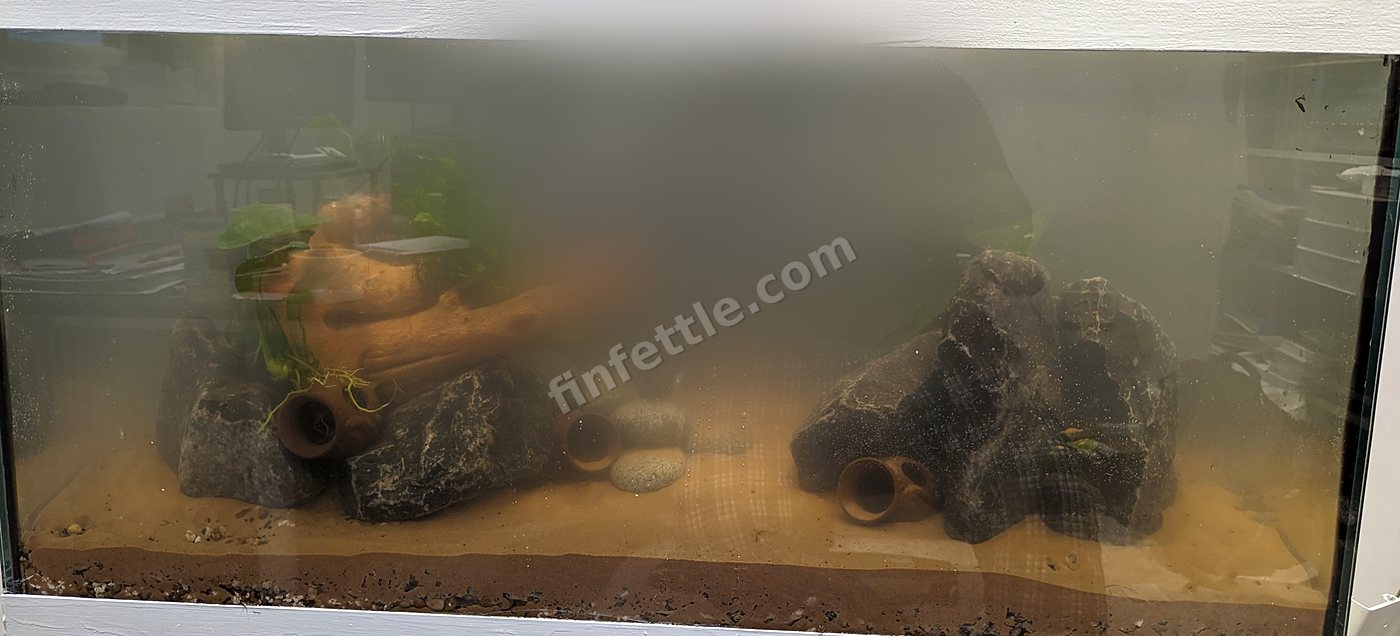
You set up a new tank, the water was clear, and a day or two later it's gone milky white — like someone tipped a splash of milk into it. This is almost always a bacterial bloom, and the good news is it's one of the least dangerous things that can happen to an aquarium. It looks alarming; it's usually harmless and temporary.
An aquarium bacteria bloom like this is one of the most common things beginners panic over — and one of the least worth panicking about. This guide answers the questions people actually search for: how long does bacterial bloom last, is a bacterial bloom bad for fish, whether to do a water change or wait, and how to clear it. If your water is cloudy but you're not sure a bloom is the cause, my cloudy aquarium water page covers the other possibilities too.
What a bacterial bloom is
A bacterial bloom is a rapid multiplication of free-floating heterotrophic bacteria — bacteria that feed on dissolved organic compounds in the water, such as the nutrients in fresh tap water, decaying food, or fish waste. When there's a sudden abundance of that food, these bacteria reproduce explosively, and the sheer number of them floating in the water column is what you see as a milky haze.
Aquarium Co-Op describes the classic test: look at a glass of the tank water against something white. If it looks like diluted milk with almost no visible particles, you're dealing with a bacterial bloom rather than debris or algae.
A bloom is not the same as a cycled tank
This trips up a lot of beginners. The bacteria that make a bloom are not the beneficial nitrifying bacteria that cycle your tank. Those live on surfaces — your filter media, substrate and decor — not floating in the water. So a bloom is not a sign your tank has finished cycling. See my cycling guide for what "cycled" actually means.
Why it happens (usually a new tank)
Most blooms happen in the first couple of weeks of a new setup, because fresh, dechlorinated tap water and new substrate are full of the dissolved nutrients these bacteria love — The Spruce Pets notes it happens even in a fishless cycle with nothing but water and ammonia in the tank. But an aquarium bacterial bloom can also appear in an established tank when the balance is disturbed — for example after:
- Overfeeding, which dumps extra organic matter into the water.
- Adding a lot of fish at once, before there's enough biological filtration to keep up.
- Overcleaning — big water changes, deep-cleaning or replacing filter media — which strips out beneficial bacteria and lets the free-floaters surge.
- A dead fish, snail or plant left to decay.
- A medication that killed off beneficial bacteria.
In every case the pattern is the same: a spike in available nutrients, followed by a bacterial population explosion to match.
Is a bacterial bloom bad for fish?
Not in itself. The heterotrophic bacteria in a bloom are harmless to fish, and most fish carry on eating and behaving normally through one.
The one real risk is oxygen. A dense bloom of aerobic bacteria consumes a lot of it, so the water can run low — especially in a warm, still, heavily stocked tank. If you see fish hanging near the surface, increase surface agitation or add an air stone; if they're actively gasping, read fish gasping at the surface and act now.
The second thing to watch isn't the bloom, it's what tends to come with it. As those bacteria break waste down, ammonia production rises before the slower nitrifying bacteria can catch up — The Spruce Pets makes the point that the bloom drives the ammonia spike, not the other way round. That's why the first step below is a test, not a water change.
How long does bacterial bloom last?
Typically one to two weeks. The bloom is self-limiting: once the free-floating bacteria have eaten through the excess dissolved organics, they starve and die back, and the water clears on its own.
A few things stretch that out. A brand-new tank can take a little longer while the filter bacteria establish. Big or frequent water changes tend to reset the food supply and prolong it — Aquarium Co-Op's advice is bluntly "do nothing" for this reason. And an ongoing source of waste (overfeeding, something decaying) will keep feeding it indefinitely. Forum threads describing blooms of three, four or five weeks almost always turn out to have one of those going on.
Rule of thumb: under two weeks is normal, three or four is not unusual in a new tank, and beyond that — or if it keeps coming back — look for the source rather than waiting harder.
Should I do a water change, or wait?
Wait — unless the test says otherwise. This is the question that divides the forums, and the answer depends entirely on your ammonia and nitrite readings, not on how cloudy the tank looks.
If ammonia and nitrite are both 0 ppm, the cloudiness is cosmetic. Water changes won't clear it and often make it last longer, because you're removing bacteria that were keeping up with the waste and adding fresh tap water with its own dissolved organics for the free-floaters to eat. Leave it.
If either reading is above 0, do water changes — but for the fish's sake, not the haze. Keep them moderate rather than massive, and size them against your tank's real water volume.
Free tool
If a test shows you do need water changes, size them against your tank's real water volume, not the rated capacity — the calculator gives you that number.
Aquarium volume calculator →How to clear a bacterial bloom
The instinct is to "fix" cloudy water with heavy cleaning. With a bloom, that usually backfires. The steps in the box above boil down to: confirm it's safe, then let it run its course.
Test the water first
Before anything else, check ammonia and nitrite with a liquid test kit. This is the one thing that matters. If both read 0 ppm, the bloom is purely cosmetic and you can wait it out. If either is elevated, your priority shifts to protecting the fish — see new tank syndrome and ammonia poisoning. If you don't own a liquid kit yet, my aquarium test kit picks explain which one to get and why strips aren't enough for this.
Don't overclean, and feed lightly
Resist big daily water changes and don't tear down the filter. Both remove the very bacteria and nutrients the tank is working through, and tend to make a bloom last longer. Cut feeding back so you're not topping up the food supply, and remove any uneaten food or anything dead you find.
Keep it well aerated
This is the one genuine risk to manage. A dense bloom of bacteria consumes oxygen, so increase surface agitation or drop in an air stone while it's cloudy — especially if you see fish spending time near the surface.
Wait it out
Once the excess nutrients are consumed, the bloom bacteria starve, die back, and the water clears — typically within one to two weeks. Patience really is the fix.
What about a UV steriliser or a water clarifier?
A UV steriliser kills free-floating bacteria as water passes through it, so it will clear the water column faster. It's optional, and it doesn't fix the cause — and Aquarium Co-Op advises against adding one for a bloom, saying it can make the bloom last longer. Save it for green water, where it genuinely shines. Water clarifiers work by clumping suspended debris so the filter can catch it; they do nothing useful against a true bacterial bloom.
Bacterial bloom in a new tank
A bacterial bloom in new tank water — a fish tank bacteria bloom a few days after filling — is the most common version and the least worrying. Fresh tap water and new substrate are loaded with dissolved organics; the fast-breeding heterotrophs get to them first, long before the slow-growing nitrifying bacteria are established. The bloom is a normal early stage of cycling, not a problem with your setup.
Two questions come up every time:
Does it mean the tank is cycled? No — see the callout above. A bacterial bloom in aquarium water tells you nothing about the cycle. A cycled tank is one where ammonia and nitrite both read 0 and nitrate is rising, measured with a test kit. If you're doing a fish-in cycle, keep testing daily; the bloom is the least of it.
Can I add fish during the bloom? Go by the test, not the water. If ammonia and nitrite are holding at 0 ppm, the water is safe to stock whether or not it's hazy. But add fish gradually — a big group at once is itself a classic trigger for a fresh bloom and an ammonia spike, because the filter bacteria haven't grown to match the new load. My cycling guide covers how to stock a new tank in stages.
Bloom not going away, or keeps coming back?
If a bloom is still milky after four weeks or so, or your established tank blooms every few weeks, stop waiting and look for the food source. The usual suspects are overfeeding, a dead fish or snail tucked behind decor, decaying plant leaves, a filter that hasn't been rinsed in months, and — ironically — overcleaning, where each deep clean or huge water change knocks the bacteria back and restarts the cycle. Fix that, and the bloom fixes itself.
When cloudiness isn't a bloom
Not every cloudy tank is a bacterial bloom. A greenish tint is an algae bloom (different cause, different fix); a grey, gritty cloud right after setup is usually fine sediment or dust from unrinsed substrate that settles or filters out in hours. A true bacterial bloom is white and milky and shows up a day or more after setup.
My cloudy aquarium water guide walks through telling them apart.