
A fish gasping at surface level, mouth working at the top of the tank, is one of the more alarming things to walk in on — and it's usually a genuine emergency. Fish gasping for air almost always comes down to one thing: they can't get enough oxygen. Either the water is low on oxygen, or something has damaged the fish's ability to use it.
Because it's urgent, act before you diagnose. Increase aeration right now — point a filter outflow at the surface or add an air stone — and then test ammonia and nitrite and change water if either is up. Those two steps resolve the large majority of cases. The detail below helps you find the specific cause.
Do this first
Increase surface agitation immediately (filter outflow at the surface, air stone, or lower the water line so the return splashes). Oxygen enters water at the surface, so more movement means more oxygen within minutes — buying time while you work out the cause.
Why fish gasp: the three main causes
Low dissolved oxygen in the water
Sometimes the water simply doesn't hold enough oxygen. University of Florida IFAS Extension notes that warm water holds far less oxygen than cool water, and that fish show distress as oxygen falls — with "piping," gulping at the surface, a classic sign of an oxygen shortage. Common triggers in a home tank are high temperature, too little surface movement, overcrowding, and a dense bacterial bloom (the bloom bacteria consume oxygen). Oxygen is also naturally lowest just before dawn, which is why some tanks only show gasping in the early morning.
Ammonia or nitrite poisoning
Here the oxygen in the water may be fine — but the fish still can't use it. Ammonia damages the gills, so oxygen uptake fails. Nitrite is worse still: as Texas A&M AgriLife Extension explains, it converts the fish's blood to methemoglobin, which can't carry oxygen, so affected fish suffocate even in fully oxygenated water (this is "brown blood disease"). This is extremely common in new, uncycled tanks — which is why gasping and new tank syndrome so often go together.
Gill irritation or disease
Parasites and infections that attack the gills (and some other irritants) can also drive rapid surface breathing. This is less common than the first two and usually comes with other signs — flashing, spots, visible gill damage. Rule out oxygen and water chemistry first, because they're both more likely and faster to fix.
Test the water — it splits the causes apart
The fastest way to know which cause you're dealing with is a water test. Check ammonia and nitrite with a liquid kit:
- Either one above 0 ppm → poisoning is driving the gasping. Do a dechlorinated water change now and follow the plan in ammonia poisoning and new tank syndrome.
- Both 0 ppm → this is an oxygen problem. Focus on aeration, temperature and stocking.
Free tool
A water change only brings ammonia or nitrite down by the percentage you actually swap — and that depends on the real volume, not the one on the box. Work it out here.
Aquarium volume calculator →What to do next
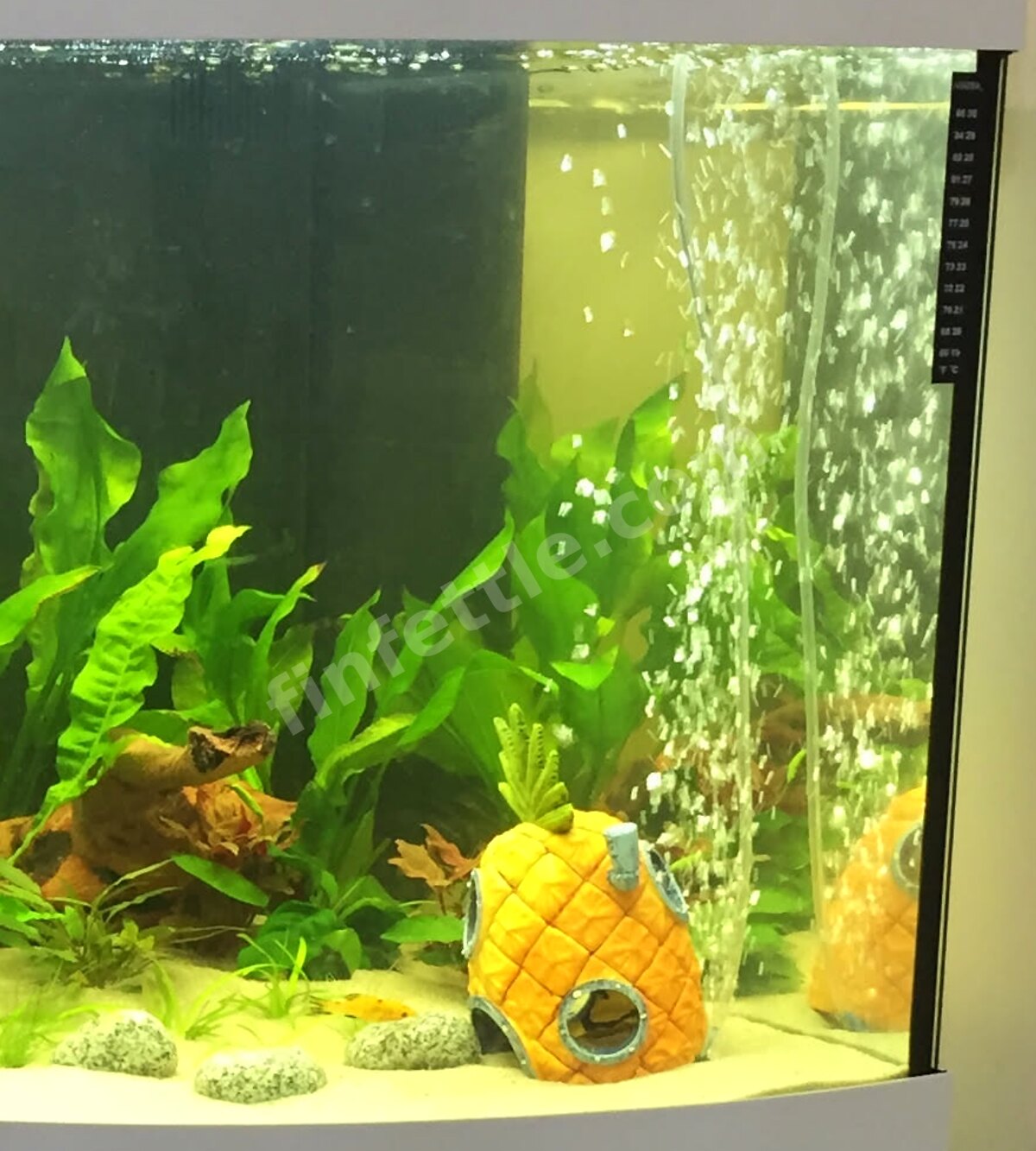
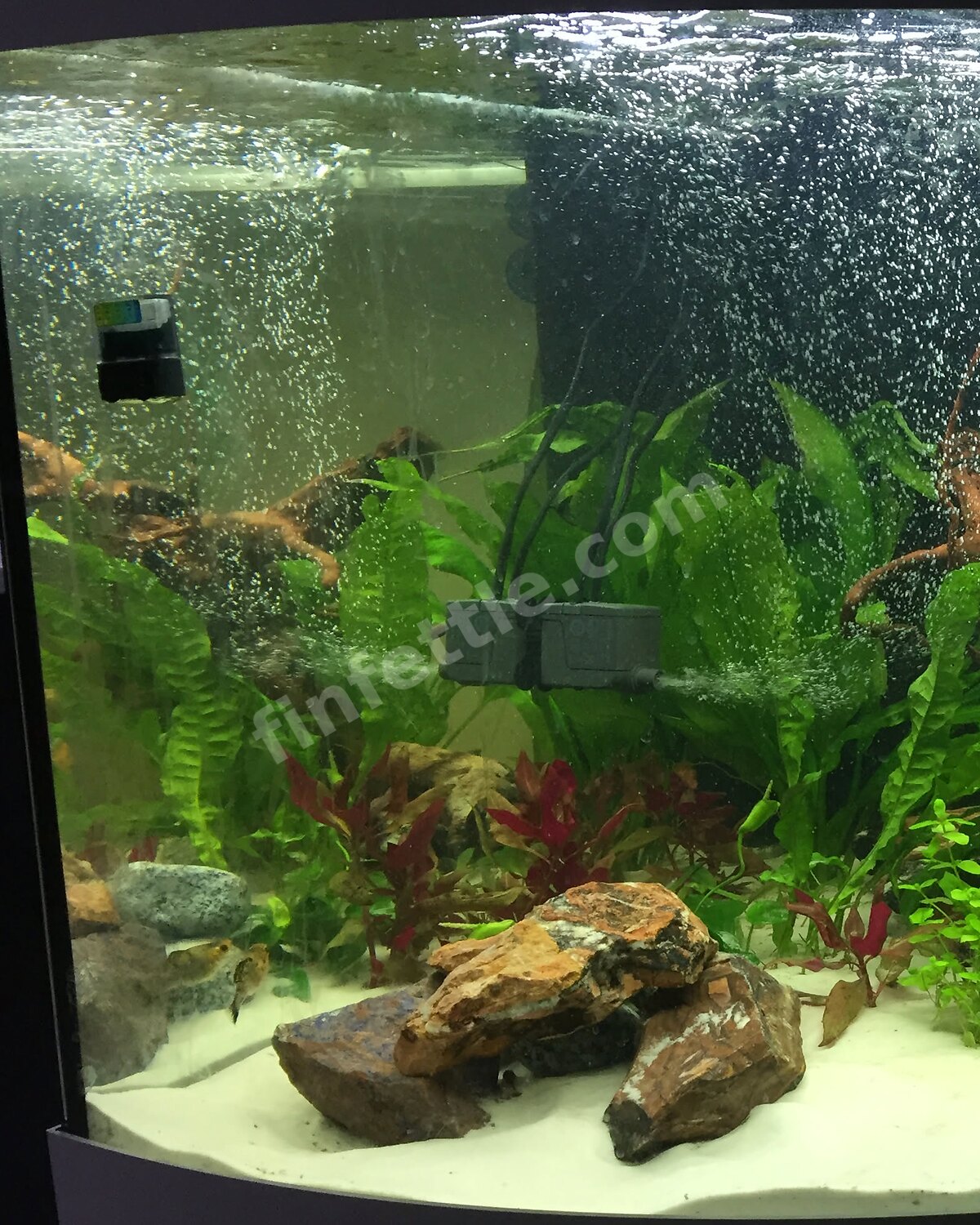
Get oxygen in (all cases). More surface agitation is the universal first move. An air stone and pump, a filter return aimed at the surface, or a slightly lowered water level all increase gas exchange. If the tank is warm, a partial water change with slightly cooler (not cold) dechlorinated water both raises oxygen and reduces the fish's oxygen demand.
If ammonia or nitrite is up, treat that as the primary problem: 25–50% dechlorinated water change now, cut feeding, test daily, and let the tank finish cycling. Full plan in new tank syndrome.
Reduce demand. Don't feed heavily while fish are gasping, don't add more fish, and if the tank is overstocked or very warm, address that — both raise the oxygen the fish need while lowering what the water can supply.
When to get hands-on help
Gasping is a sign fish are in real distress. If several fish are gasping at once, if it continues after you've boosted aeration and confirmed clean water, or if fish are collapsing, get hands-on help fast: move the fish to mature, cycled water if you can get to some, or take it back to the shop — most good aquarium shops will advise on, or even take in, a struggling fish — or ask a fellow keeper to hold it. Persistent gasping with good water and good oxygen points to a gill problem that husbandry alone won't fix. This guidance is educational and husbandry-first, not a diagnosis.
Fish gasping for air after a water change
If the gasping started right after a water change or a tank clean, the water change is the prime suspect — and the good news is that the causes are usually quick to fix. The pattern to look for: fish were fine, you changed water, and within minutes to an hour they're at the surface.
Chlorine or chloramine in the new water
Tap water in most areas is treated with chlorine or chloramine. The Merck Veterinary Manual describes both as highly toxic to fish, with adverse effects at chlorine concentrations as low as 0.02 mg/L — far below what comes out of the tap. Both attack the gills, and irritated gills mean gasping.
The common mistakes are under-dosing conditioner (labels dose per volume of water — read whether yours means the new water or the whole tank, and dose for the real volume, not the one on the box), forgetting it altogether on a small "top-up", and using a conditioner that handles chlorine but not chloramine when your supply uses chloramine. If you're not sure whether your tap water carries chloramine, your water company's website usually says.
Free tool
Conditioner labels dose per litre or gallon of water. Work out your real tank volume (and the volume of your buckets) once, and you'll never under-dose again.
Aquarium volume calculator →A sudden temperature change
New water that's several degrees colder or warmer than the tank is a shock in itself, and warmer water holds less oxygen — University of Florida IFAS Extension notes how sharply oxygen drops as temperature rises. A big change with water that wasn't temperature-matched can leave fish gasping until the tank settles. Match new water to the tank by feel or with a thermometer, and keep the change smaller if you can't.
Stirred-up substrate or a cleaned filter
A deep gravel vacuum or a heavy-handed filter clean can release trapped waste and, in an established tank, knock back the beneficial bacteria enough to produce an ammonia or nitrite blip. That's why the answer is always the same: test ammonia and nitrite. If either is above 0, follow the plan in ammonia poisoning; if the tank is new, read new tank syndrome.
What to do, and how long it takes
Aerate now. Check the new water was conditioned for the full volume and roughly temperature-matched. Test ammonia and nitrite. If the numbers are clean and the temperature is back to normal, fish usually settle within an hour or two. If they're still gasping after that, or the tests aren't clean, do a properly conditioned, temperature-matched partial water change and keep the aeration up. Gill damage from chlorine or chloramine can take days to heal, so a fish that's had a real dose may breathe hard for a while even once the water is right.
Goldfish gulping at the surface
Goldfish get their own section because two things are true at once: a goldfish gulping at surface level around feeding time is normal — it's chasing floating food and the surface film — and a goldfish gasping at surface level the rest of the time is the same warning it is in any other fish.
The reason goldfish end up here so often is waste. They're big, messy eaters that produce a lot of ammonia for their size, and they're frequently kept in tanks too small for them. King British's own advice for a gasping goldfish is the same order as ours: test ammonia and nitrite first, then increase aeration and do a partial water change — and they note that oxygen is consumed by excess waste and sludge in the tank, so a dirty tank is a low-oxygen tank.
So for a goldfish: is it only at feeding time, with normal gill movement and normal behaviour afterwards? Fine. Is it repeated or constant, with fast gill movement, sitting near the surface or lying low? Test ammonia and nitrite, aerate, and change water. A goldfish tank that needs an air stone to keep the fish comfortable is usually a tank that's overstocked or under-filtered for the fish in it. If your goldfish also has white spots, see white spots on goldfish.
Only one fish gasping?
If the whole tank is gasping, it's the water — oxygen, ammonia, nitrite, temperature, or something added. If one fish is gasping while the rest behave normally, the water is less likely to be the cause and the fish is. Still test (weaker fish show a water problem first), but look closely at that fish for gill damage, flashing, spots or clamped fins, and consider isolating it. A single gasping fish in clean, well-aerated water is one of the escalation triggers in the callout above.
One exception: labyrinth fish
Bettas, gouramis and other labyrinth fish breathe air from the surface as normal behaviour — an occasional gulp at the top is fine and healthy. What's not normal is rapid, continuous surface breathing with clamped fins or lethargy. If the behaviour looks frantic or constant, treat it like any other gasping and test the water.