
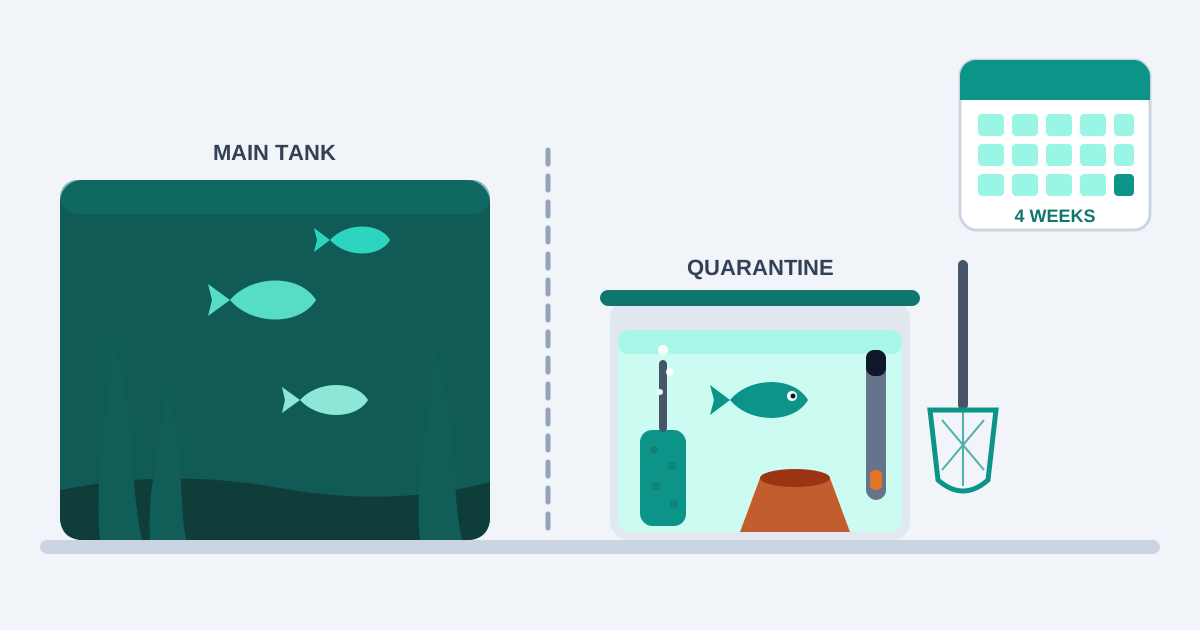
A quarantine tank is a small, separate tank where new fish spend about four weeks before they join your main aquarium. If they're carrying something like ich or velvet, it shows up there — where you can treat one or two fish — instead of in a tank full of fish you've had for years.
You don't need much: a spare tank or tub, a filter that's already cycled, a heater, something to hide in and a net that never touches your main tank. This guide covers the quarantine tank setup step by step, how long to keep fish in it, what to watch for, and how to move them across at the end. It's written for freshwater fish.
What you'll need
- A small tank or tub — big enough for the new fish to swim comfortably (see step 1 below).
- A seeded filter — a sponge filter is the usual choice: cheap, gentle and easy to keep running in your main tank between uses.
- A heater and a thermometer.
- A hiding place — a clay pot, a length of pipe or one ornament.
- Its own net and bucket.
- A liquid test kit for ammonia and nitrite.
- A lid — some fish jump, especially somewhere new.
You don't need a matching light, gravel or a decorated scape. Quarantine is the one tank where bare and boring is the point.
Quarantine tank or hospital tank?
They're usually the same piece of kit used for two different jobs:
- Quarantine tank — new fish (and, ideally, new plants and invertebrates) wait here before joining the main tank. The Merck Veterinary Manual describes its purpose as preventing the accidental introduction or spread of infectious disease to an established group of fish.
- Hospital tank — a sick fish moves here so you can watch it closely and treat it without dosing the whole aquarium. Merck notes that isolating a fish also allows easier observation and treatment.
The setup below works for both.
How to set up a quarantine tank
- Pick the tank. It needs to be big enough for the fish to swim around comfortably. LiveAquaria suggests about 10 to 20 gallons (roughly 40–75 litres), with 29 gallons or larger preferable for bigger fish. Aquatic vet Dr Jessie Sanders sizes it by the fish — a few gallons for a betta, far more for goldfish or cichlids. A clean, food-safe storage tub is fine if you can fit a filter and heater. Set it up away from the main tank so splashes and nets don't cross over.
- Seed the filter. This is the step people skip. AquariumScience.org is blunt: a quarantine aquarium needs a cycled filter. The easy way, suggested by Aquarium Co-Op, is to keep a spare sponge filter (or extra media) running in an established tank, then move it across when you need it. Dr Sanders suggests taking extra media from your main tank to skip new tank syndrome. Either way, the quarantine tank starts with bacteria that can handle the fish's waste.
- Add a heater and a thermometer. Dr Sanders recommends a heater sized for the tank. Set it to suit the new fish, and close to your main tank's temperature so the move at the end isn't a shock.
- Keep it bare, but give them cover. AquariumScience.org notes most people run quarantine tanks bare-bottomed with no plants or decorations — you can see the fish, see the waste and siphon it out. Dr Sanders points out that sick or stressed fish want to hide, so add one pot, pipe or ornament.
- Give it its own equipment. Merck says quarantined fish should have their own nets, buckets and siphons, and that they should be handled only after you've finished with all your other fish for the day. AquariumScience.org treats anything used on the quarantine tank as contaminated.
- Test the water before the fish go in. Dr Sanders calls a water test kit a must for any quarantine setup. You want ammonia and nitrite at 0 — if they aren't, the filter isn't seeded yet. Aquarium ammonia explains what the readings mean.
Free tool
Quarantine tanks are small, and small tanks are the easiest to get wrong — a water change is a bigger share of the water, and any medicine is dosed by litres. Work out what yours really holds before you need it.
Aquarium volume calculator →How long to quarantine fish
Sources don't agree, so here's the honest range:
| Source | How long |
|---|---|
| LiveAquaria | At least 2–3 weeks for new arrivals |
| AquariumScience.org | At least 4 weeks; longer for fish from local stores |
| Merck Veterinary Manual (vet edition) | 30 days minimum, longer may be needed |
| Dr Jessie Sanders, DVM | 4–6 weeks, including invertebrates and plants |
| Merck Veterinary Manual (owner edition) | 30–60 days for valuable pet fish |
About four weeks is where most of them land, and it's what I'd aim for with ordinary community fish. Two rules matter more than the exact number:
- Restart the clock if you add more fish. Merck says that once quarantine has started, no new fish can be added or the period must be restarted — the newcomers could bring in something that hasn't had time to show.
- Restart it if something shows up. Aquarium Co-Op counts 4–6 weeks from the last sign of disease or death, not from the day the fish arrived.
What to do during quarantine
- Let them settle. AquariumScience.org's own approach is a quiet, dark spot for the first day or two so new fish can rest and de-stress. Lights low, lid on, no poking.
- Look at them every day. You're watching for white spots (ich), a gold or rusty dust (velvet), clamped or ragged fins, flashing against objects, heavy breathing, cloudy eyes, or a fish that won't eat. LiveAquaria suggests looking closely at colour, fins and eye clarity.
- Feed lightly. A small tank fouls quickly, and uneaten food is ammonia waiting to happen.
- Test ammonia and nitrite every couple of days, and act on any reading above 0 with a partial water change using dechlorinated, temperature-matched water.
- Use the quarantine net and bucket only, and do the quarantine tank last.
Moving fish into your main tank
When the fish have been through the full period with nothing showing, AquariumScience.org says it's safe to move them across. Check the two tanks are at a similar temperature first, then net the fish over with the quarantine net. Afterwards, keep an eye on the main tank for a week or two, just as you would after any change.
Should you medicate in quarantine?
The vet advice leans towards watching first and treating what you see. Dr Sanders warns against simply adding every over-the-counter antibiotic without any signs of disease. If a fish does show something, you're in the right place: a small, separate tank is the easiest place to treat it. Start with how to treat ich or velvet disease, and dose by the quarantine tank's real volume, exactly as the medicine's label says.
My own habit is mixed, and I'd rather be honest about it. Sometimes I set up a temporary quarantine tank for about two weeks — the short end of the range above. Other times I add new fish straight into the main tank and run a course of eSHa 2000 as cover.
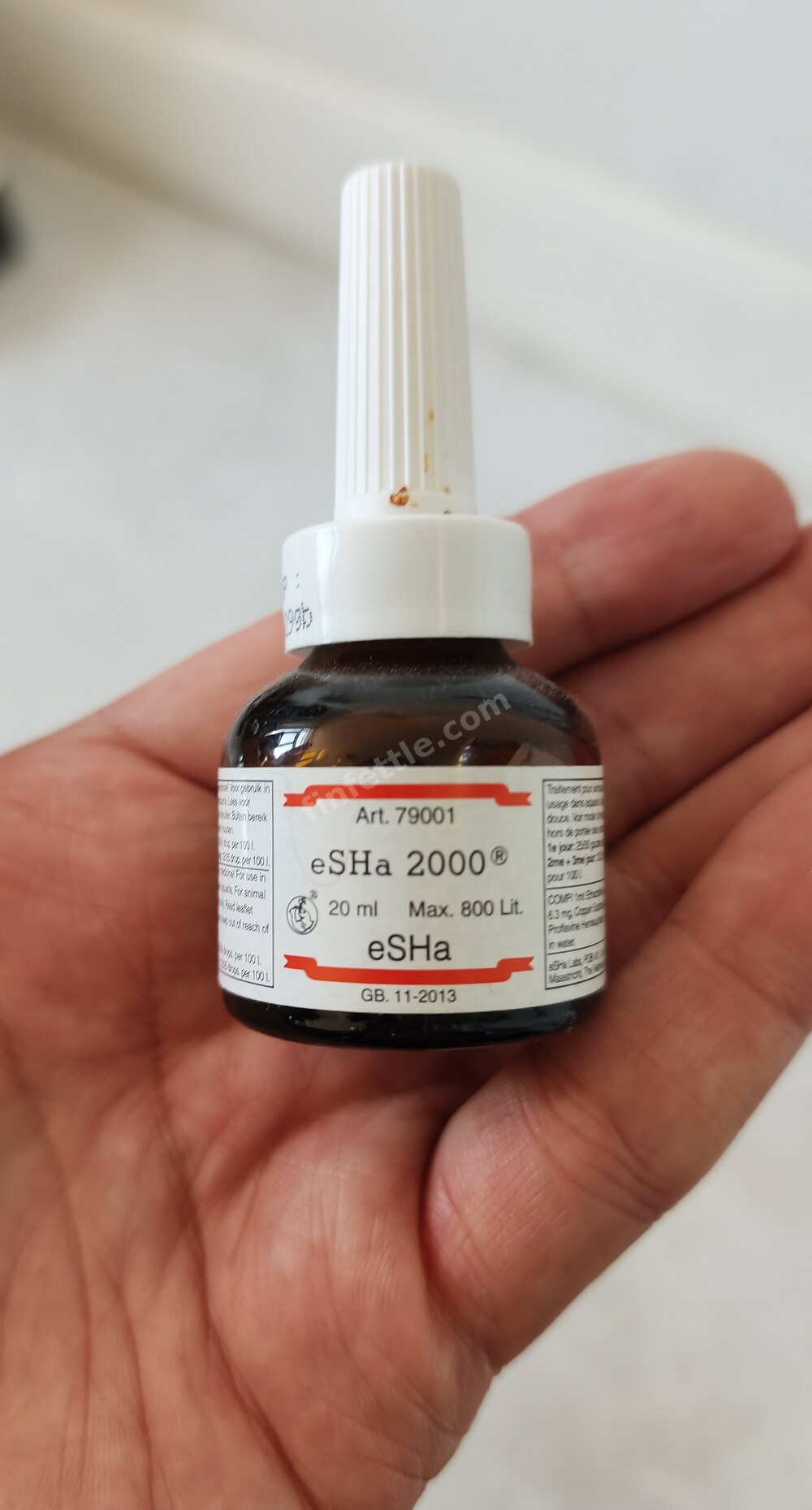
If you use a product preventively, pick one whose own label describes that use, and follow it exactly. eSHa's product page says to be careful with shrimp because it may kill snails — another reason invertebrates shouldn't share a tank you might medicate. LiveAquaria makes the same point about copper-based medicines. A proper quarantine is still the safer option: medicine can only cover what it treats, and four weeks of watching catches things a bottle doesn't.
Common quarantine mistakes
- An uncycled tank. Fresh water and a brand-new filter means ammonia climbs with fish in it — the stress can bring on the very disease you're trying to catch.
- Sharing the net. One dip from the quarantine tank into the main tank undoes the whole exercise.
- Adding fish halfway through. That restarts the clock for everyone.
- Ending early because they "look fine". Every source above talks in weeks, not days, for a reason — give problems time to show.
- Shrimp or snails in a tank you're medicating. Many fish medicines, copper ones especially, harm them.
- Ignoring the label's filter instructions. Some medicines say to take carbon out of the filter while you treat — check before you dose.
After quarantine: cleaning up
Merck says quarantine systems should be completely broken down and disinfected between uses. LiveAquaria suggests a mild 2–5% household bleach solution for disinfecting between uses; rinse thoroughly and let everything dry fully before it goes near fish again. Aquarium Co-Op's approach is to clean the hospital tank setup and store everything dry — and, in between, keep a sponge filter running in your main tank so it's seeded and ready next time. Don't put the quarantine sponge straight back, though: Dr Sanders says filter media coming back from quarantine to the main tank must be sterilised first.
When to get help
If fish in quarantine keep dying, or the signs don't match anything you can identify, an aquatic vet can examine a sample and tell you what you're dealing with — guessing with medicines can make it worse. This page is educational and husbandry-first; it's not a substitute for a vet.
Related
- How to cycle an aquarium — why a seeded filter matters
- How to treat ich — the disease quarantine most often catches
- Aquarium test kits — what I use and how I chose