
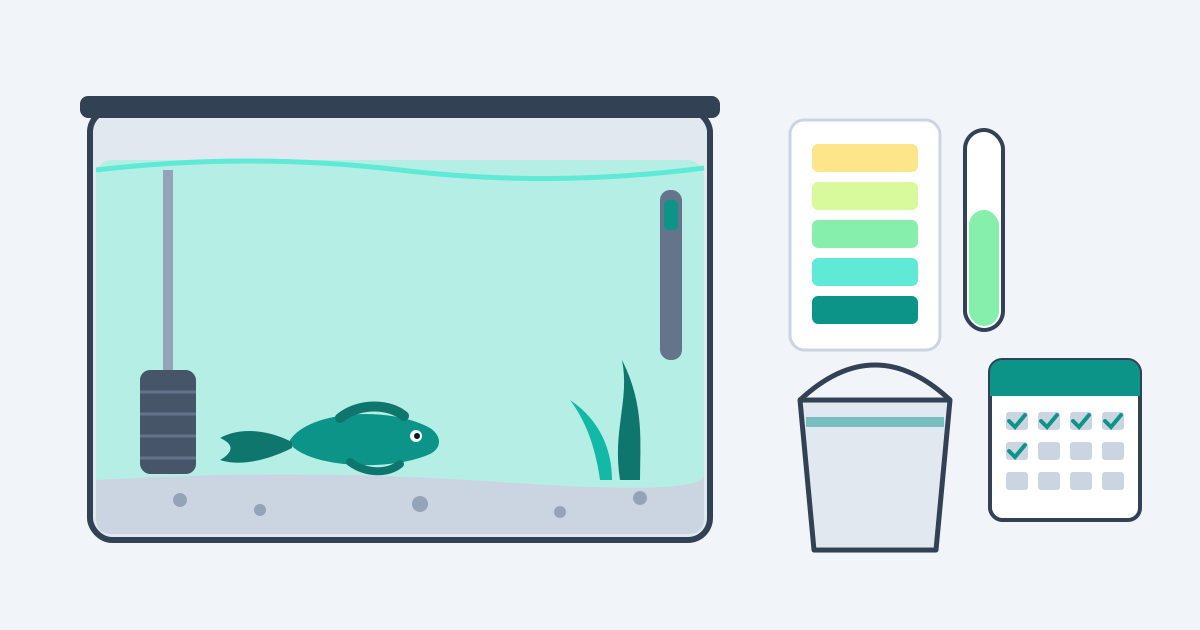
If your betta has just gone into a new tank and is now lying on the bottom, clamping its fins or ignoring food, test the water for ammonia and nitrite before anything else. In a tank that's only days or weeks old, either one reading above 0 means the filter hasn't grown enough bacteria yet — that's new tank syndrome — and the fix is water changes, light feeding and patience.
This page is the betta lens. The general explanation of what's happening, for any fish, is on my new tank syndrome page. Here's what's different when the fish is a betta: smaller tanks, a fish that breathes air, and behaviour that's easy to mistake for settling in.
Why betta tanks are hit hard
A brand-new tank has almost none of the bacteria that turn fish waste into something safe. Ammonia builds up first, then nitrite as the first bacteria appear, and the fish sits in both until the filter catches up. Aquarium ammonia explains the chemistry.
Betta setups make this easier to hit:
- Small water volume. The same amount of waste in less water means a higher concentration. Tree of Life Exotics, a vet practice, recommends at least 5 gallons for a single betta. The University of Florida's betta guide makes a related point from the other direction: water quality depends on how the tank is managed, not on how big it is — and that management means frequent water changes. In a small tank, that work matters more, not less.
- The upgrade moment. Many bettas come home in a cup, then move into a freshly set-up tank the same day. The fish is new and the filter is new at the same time.
- Gentle filters. Bettas prefer calm water, and Tree of Life recommends gentle filtration such as a sponge filter. That's the right choice for the fish, but a small new filter still needs time to build its bacteria.
Signs of new tank syndrome in a betta
The signs come from poor water, not a specific disease, so they're the same kind you'd see in any fish. (Most sources put it down to ammonia and nitrite; AquariumScience.org argues it's often toxins from bacteria fed by overfeeding and overstocking instead. Either way, the fix is the same: less food, more water changes.)
- Lying on the bottom or wedged in a corner, not exploring.
- Clamped fins — held tight against the body instead of fanned out.
- Refusing food it would normally take.
- Breathing hard at rest. Texas A&M AgriLife Extension explains that nitrite turns haemoglobin into methaemoglobin, which can't carry oxygen, so affected fish show signs of low-oxygen stress even when the water is full of oxygen.
The timing is the other clue: trouble in the first few weeks of a new tank, especially if nothing was done to seed the filter.
New tank syndrome, or just settling in?
A betta moved into a new tank often hides or stays still for a while, and that alone isn't a problem. There's no fixed number of days for settling in, so don't guess — test. If ammonia and nitrite both read 0 and your betta is eating, it's probably just adjusting. If either is above 0, treat it as new tank syndrome, whatever the betta looks like.
If both are 0 and your betta still looks unwell, check the heater first. Tree of Life recommends 78–80°F (25.5–26.5°C) with a reliable heater and warns that below 76°F the immune system can weaken. Then look for other causes: betta fish ich for white spots, betta fish velvet for a gold dust.
Why breathing air doesn't protect a betta
Bettas have a labyrinth organ — the University of Florida guide describes paired chambers above the gills that let them take air from the surface. That's why a betta swimming up for a gulp of air is normal, and why surface trips on their own aren't a useful sign.
It doesn't protect against new tank syndrome. Ammonia is in the water that the betta's gills and skin are sitting in. Nitrite works through the blood: in Texas A&M's explanation, fish struggle for oxygen even in well-oxygenated water because their blood can't carry it. Extra air at the surface doesn't change that. A betta can look "fine, just resting" while its water is the problem.
How to fix new tank syndrome in a betta tank
You're protecting your betta by hand until the bacteria catch up. The full method is on the new tank syndrome page; here it is with the betta details.
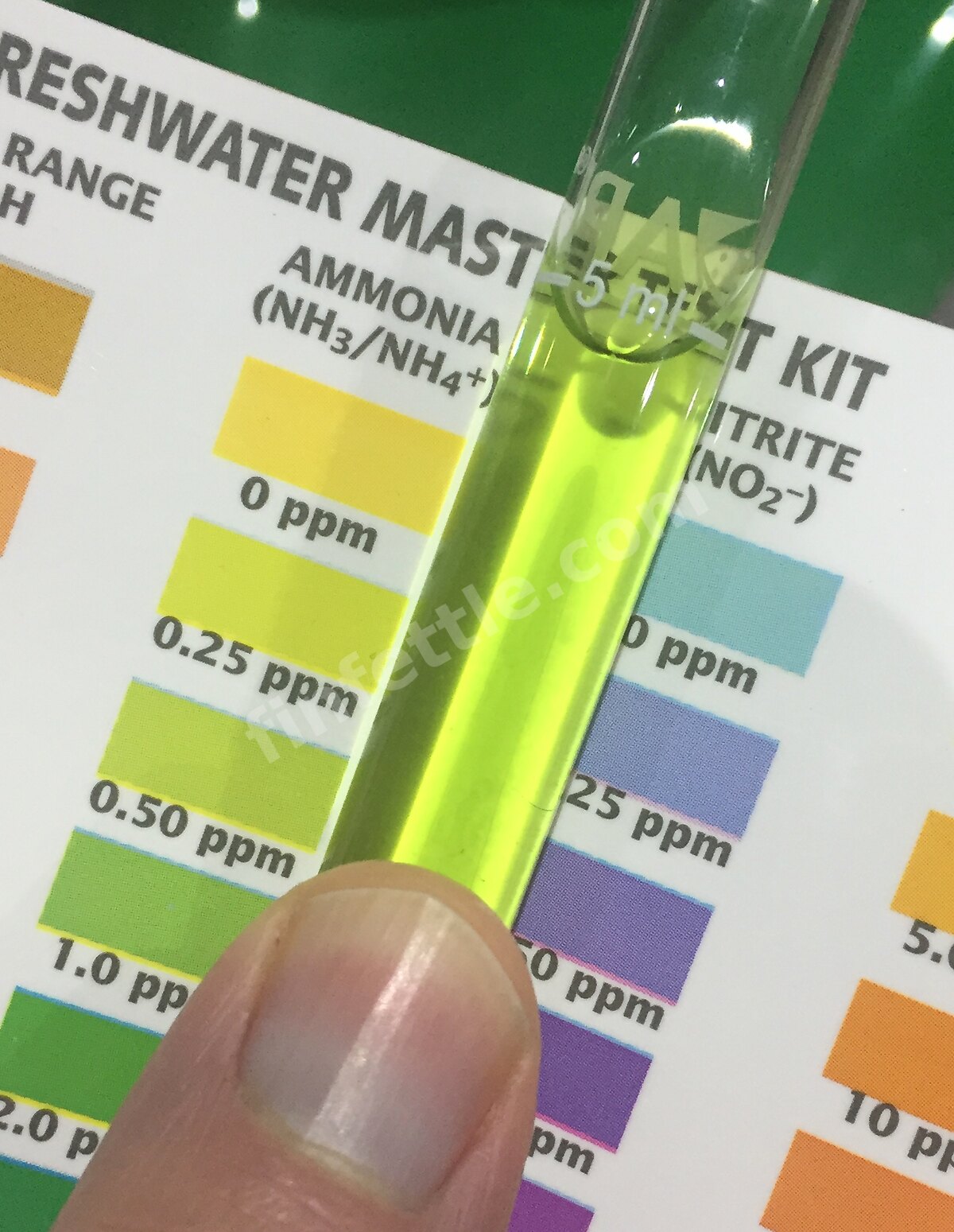
- Test ammonia and nitrite. A liquid kit gives you a clear number. Tree of Life's target for a betta tank is 0 ppm for both.
- Change 25–50% of the water with dechlorinated, temperature-matched water. Tree of Life recommends treating tap water with a conditioner for every change. Match the temperature carefully — a small tank swings fast, and a cold refill is the last thing a stressed betta needs.
- Feed lightly. Less food means less waste. AquariumScience.org's rule of thumb for new tanks is not to feed more than the fish can eat in one minute, once a day. Take out anything left over.
- Test every day and change water again whenever ammonia or nitrite shows up.
- Leave the filter alone. Keep it running all the time, and don't rinse or replace the sponge or media while the tank cycles — that's where the bacteria are growing.
- Keep the heater steady in the range above. Cold water adds stress on top of poor water.
Free tool
In a small betta tank, a '5 gallon' box holds less water once the substrate and decor are in. Work out the real volume so you know how much a 25–50% change actually is.
Aquarium volume calculator →Some conditioners say they bind ammonia for a while. If yours does, it can buy time between changes, but follow its own label for how much to add and don't rely on it instead of water changes.
How long does it last?
Until the tank finishes cycling — when ammonia and nitrite both stay at 0 without your help. That's usually a few weeks, but it varies a lot with temperature, how much the betta is fed, and whether the filter was seeded. AquariumScience.org's example of new tank syndrome is a new tank, stocked heavily and overfed, where the fish are dead within two months — which is why the daily testing and light feeding matter. If you're cycling with your betta in the tank, the cycling guide covers the fish-in method.
When to get expert help
Get help from an aquatic vet, or at least an experienced fishkeeper or your local fish shop, if your betta keeps getting worse even though ammonia and nitrite are being held near 0, stops eating for days, or shows other signs such as spots, dust, or fraying fins. This page is educational and husbandry-first; it's not a substitute for a vet.
Avoiding it next time
- Cycle before the betta goes in if you can. How to cycle an aquarium walks through it.
- Seed the filter with mature media or a used sponge from an established, healthy tank. It brings live bacteria with it.
- A bottled bacteria starter is optional. Independent tests are mixed — see Fluval Cycle for what the studies found — so test either way.
- Set the heater up before the fish arrives, and check it with a separate thermometer.
- Keep up water changes once the tank is cycled. Tree of Life recommends 25–50% weekly for a betta.
Every tank I've cycled has had fish in it; I've never done a fishless cycle. What changed my results was seeding: I now start each new filter with mature media and add a bottled starter, and I haven't had a problem cycle since. My own red crowntail betta went into my 90-litre planted community tank only once it was established, with corydoras and cardinal tetras already living in it. I'd seeded that tank by soaking its filter media in dirty filter water, alongside a bottled starter. The rescue steps above come from the sources cited.
More test-kit options, and how I chose them, are on my aquarium test kit page.
Related
- New tank syndrome — the full guide for any fish.
- Ammonia poisoning — what high ammonia does to fish.
- Betta fish velvet and betta fish ich — if the water tests clean.