
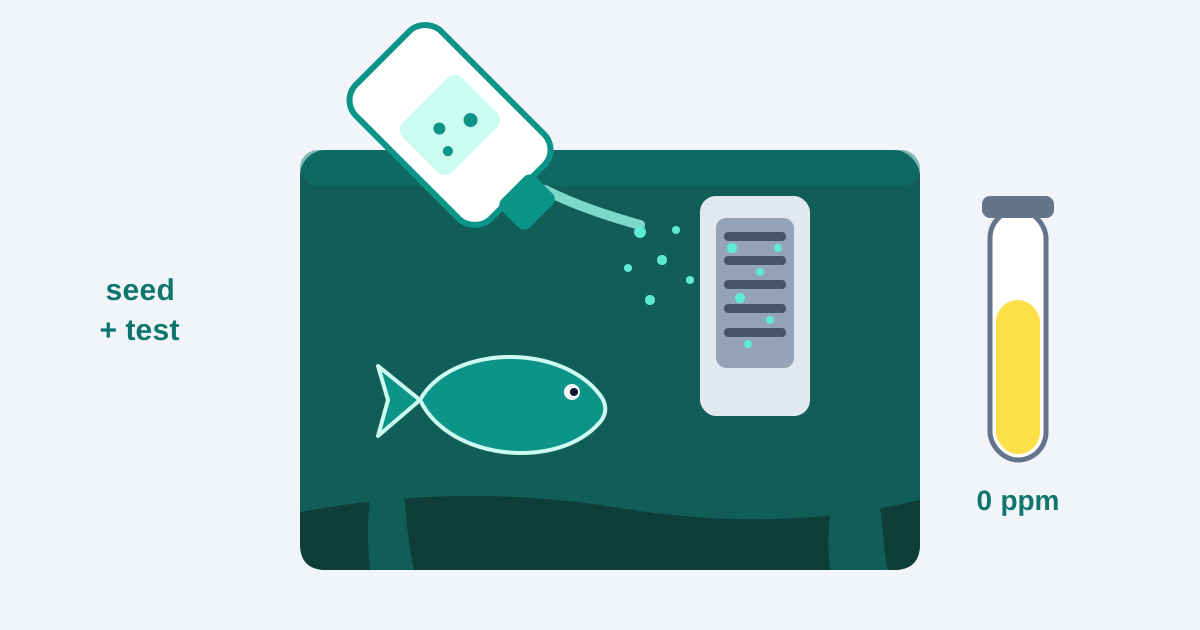
Fluval Cycle is a bottled bacteria starter: you add it to a new or freshly cleaned tank to seed the filter with the bacteria that turn ammonia into nitrite and then nitrate. It can give a new filter a head start, but it doesn't replace cycling — your tank is ready when a test kit shows ammonia and nitrite both at 0, not when the bottle is empty.
I haven't used Fluval Cycle myself, so this page isn't a hands-on review. It puts what Fluval says about the product next to the independent tests I could find, and shows how to use it inside a cycle that you check with a test kit. If you're starting from scratch, the full method is in how to cycle an aquarium.
What Fluval Cycle is
Fluval sells it as Cycle Biological Enhancer (you'll also see it as "Fluval Biological Enhancer" or "biological booster"). On its product page, Fluval describes it as releasing beneficial bacteria that eliminate ammonia and nitrite, for use in both freshwater and saltwater tanks, and says it's useful when setting up a new tank, adding new fish, and during water changes and filter media changes.
A few details from Fluval's own FAQ that help you use it properly:
- The bacteria are dormant in the bottle. Fluval says they're conditioned into a dormancy phase before bottling and activate once they're in the tank.
- The beige specks are meant to be there. Fluval calls them "Bio Flocs" and says to shake the bottle well before every dose so you get them.
- Temperature matters. If the bottle has frozen, Fluval says the bacteria are dead and you need a new one. It also advises keeping it away from high heat.
Bottle sizes run from 30 ml up to 2 litres. Fluval's label info says a 120 ml bottle treats up to 908 L (240 US gal), and a 250 ml bottle up to 1,892 L (500 US gal) — so even a small bottle goes a long way in a home tank.
How to use Fluval Cycle
The exact amount per dose is printed on the bottle, so follow your label for that. Fluval's own guidance on how to use it comes down to this:
- Dechlorinate first. Fluval recommends adding it directly to the aquarium after the new water has been properly dechlorinated — tap-water chlorine and chloramine are disinfectants.
- Shake well, then dose for your real water volume. A tank's box size isn't its water volume once substrate, rocks and decor are in.
- Seed with mature media if you have it. For a new tank, Fluval's advice is to transfer some established filter media from a healthy aquarium and dose Fluval Cycle.
- Stock slowly. Fluval says to stock a new aquarium slowly so you don't overload the biological filtration.
- Keep using it at disturbances. Fluval recommends weekly use, especially during water changes and filter media changes. For a water change, it says to dose at least for the amount of water you changed.
Free tool
Bottle doses are per volume of water. Substrate and decor take a real share of the tank's rated size — work out how much water you actually have before you measure out a dose.
Aquarium volume calculator →Whatever the bottle says, the thing that tells you it's working is your test results: ammonia and nitrite rising, then falling back to 0 as nitrate appears. That's the same sequence described in new tank syndrome.
More on choosing a kit is on my aquarium test kit page.
Does Fluval Cycle actually work?
Fluval's claim is that it eliminates ammonia and nitrite and helps establish a biologically balanced aquarium. Forum reports are mixed in both directions, and one person's fast cycle doesn't tell you much, because tanks cycle at very different speeds for lots of reasons. Controlled tests are more useful, and there are two worth knowing about.
A peer-reviewed trial that included Fluval Cycle. In 2023, the Journal of Exotic Pet Medicine published a study by Scagnelli, Javier, Mitchell and Acierno testing five quick-start bacteria products in 10-gallon tanks dosed with ammonia, against a tank with no product, measuring every 48 hours for two weeks. AquariumScience.org lists the five as API Quick Start, Imagitarium Biological Booster, Tetra SafeStart Plus, Seachem Stability and Fluval Cycle. From the abstract:
- Only Tetra SafeStart Plus significantly lowered ammonia compared with the others and the control.
- The tanks dosed with Cycle had significantly higher nitrate than the control (nitrate is the end product of the cycle), but ammonia didn't come down significantly.
- Four of the five products failed to bring ammonia below its starting level in 14 days, and the authors concluded these products shouldn't be recommended as the sole method of starting a cycle until more studies are done.
It's one small study that ran for just 14 days, so it isn't the last word. But it's the only peer-reviewed test I've found that names Fluval Cycle, and it doesn't support the idea that a bottle cycles a tank on its own.
A larger hobbyist test. AquariumScience.org tested eleven popular bacteria-in-a-bottle products (it doesn't name them all on the summary page) against untreated control tanks. In its first two test rounds, the bottled products and the controls all took 26 to 46 days to cycle; tanks seeded with brown gunk from an established filter, composted cow manure or garden soil took 8 to 12 days. The author concludes bottled bacteria don't establish a cycle any faster than adding nothing.
Both tests point the same way as the practical rule most experienced keepers follow: mature media from a healthy tank is the shortcut that reliably works; a bottle is at best a small head start.
So is it worth buying?
If you have no established tank to borrow media from, a bottled starter is a low-risk extra — Fluval says you can't overdose it. Just don't let it change your routine: test, stock slowly, and wait for 0 ammonia and 0 nitrite. If you do have a mature filter elsewhere, a handful of its media will do more for you than the bottle.
Fluval Cycle in a fishless or fish-in cycle
Fishless. The usual hobby method is to add an ammonia source and wait for the bacteria to catch up. Fluval's FAQ is unusual here: it says you can use Cycle with ammonium chloride or rotting fish food, but that it doesn't recommend either method, because they usually cause excess ammonia that prolongs the cycle. Fluval says the product contains organic matter for the bacteria to consume. Plenty of keepers still cycle fishless with ammonia and get good results — if you go that way, add it in small amounts and test, as in the cycling guide, rather than following one fixed recipe.
Fish-in. With fish in the tank, they supply the ammonia, and a bottled starter is only ever a supplement to daily testing and water changes. When I cycled my first tank — a Juwel Trigon 190 — I did it fish-in with a few hardy mollies and daily water changes, and it took around two months before ammonia stayed at 0. I didn't use a bottled starter then, so I can't tell you what Fluval Cycle would have changed. What kept the fish safe was the test kit and the water changes. If ammonia is the reading that worries you, aquarium ammonia explains what each level means and what to do.
Nitrite won't come down
A common complaint is a cycle that clears ammonia but then sits on high nitrite for weeks. Fluval's own advice for that is a 50% water change and a double dose of Cycle, followed by one or two more 50% water changes to dilute the nitrite while the bacteria catch up. Keep testing between changes, and if you have fish in the tank, keep nitrite down with water changes rather than waiting it out.
If the water has gone milky at the same time, that's usually a bacterial bloom — a separate, mostly harmless part of a new tank settling in.
Pros and cons
Pros
- Easy: shake, dose, done — and Fluval says it can't be overdosed.
- Gives a bare filter a source of bacteria when you have no mature media to borrow.
- Handy to keep for water changes and filter cleans, which is how Fluval intends it to be used.
Cons
- In a peer-reviewed 14-day trial it didn't significantly lower ammonia, and a larger hobbyist test found bottled starters as a group no faster than doing nothing.
- It can tempt you to add fish too soon — the bottle can't tell you the tank is ready; a test kit can.
- Killed by freezing, and Fluval advises against high heat too — so how a bottle has been stored matters.
A bottled starter also has an obvious use in a quarantine tank you set up in a hurry — but the same rule applies: test ammonia and nitrite daily, and seed from a mature filter if you can.
Fish already sick or dying?
If fish are gasping, red-gilled or dying while a tank cycles, deal with the water first — test, and do a water change. Ammonia and nitrite damage can need more than husbandry; speak to an aquatic vet or an experienced fish shop. This page is educational; it's not a substitute for a vet.