
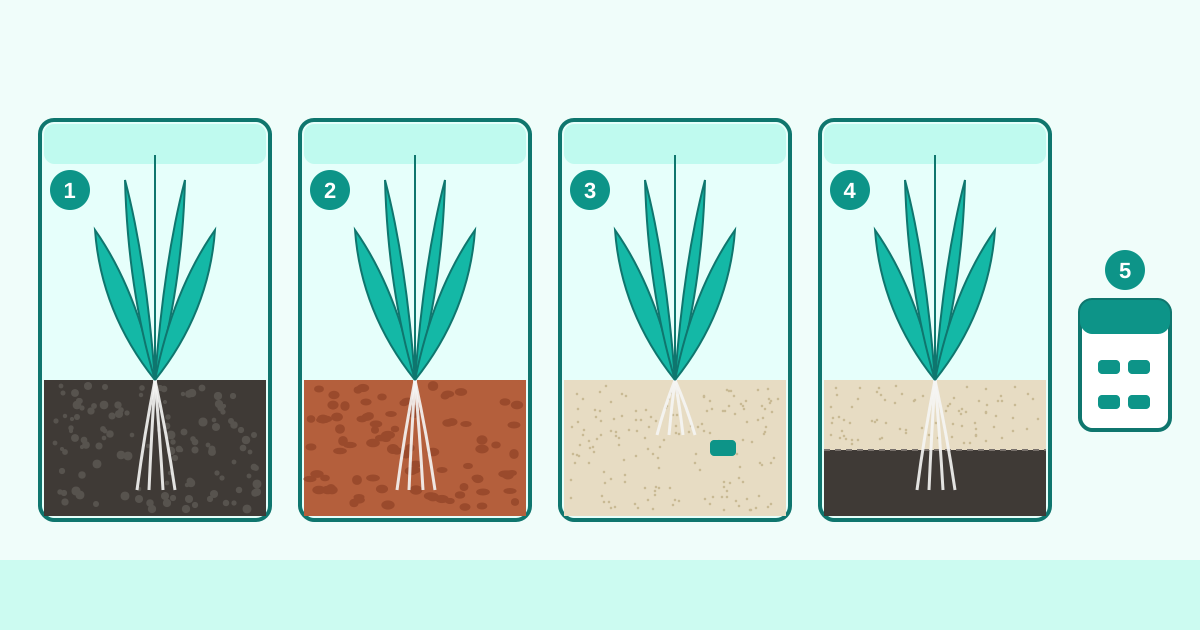
The right substrate for a planted tank depends on what you grow. For a tank packed with rooted plants, aquasoil is the easiest way to get them growing — at the cost of a lower pH, possible ammonia when new, and nutrients that run out after a year or two. A porous clay plant gravel lasts the life of the tank and leaves your water alone. Plain sand or gravel works for easy plants if you add root tabs and a liquid fertiliser.
This is a short list of five substrate types, numbered and kept in the same order, each with what it's best for and an honest drawback. None of the slots is sponsored.
How to read this page
The picks are substrate types, not products I've tested side by side. Where I name a product, it's either an example a cited source gives or one I've used myself — and I say which. My own setup is near the end, in "My own planted tanks".
The short answer
Choose the substrate for your plants first, then check it suits your fish:
- Lots of rooted or carpeting plants: aquasoil — pick 1.
- A tank you want to set up once and never re-do: porous clay plant gravel — pick 2.
- Easy plants on a budget, or plants that grow on wood and rock: plain sand or fine gravel, with root tabs for any root feeders — picks 3 and 5.
- Rooted plants, but you want sand or gravel on top: a nutrient base layer under a cap — pick 4.
- Already have a tank with plain gravel or sand: don't strip it out — add root tabs (pick 5).
The 2Hr Aquarist sums up the trade-off: inert substrates are easy to manage but have a mediocre effect on plant growth, while commercial aquasoils are great for plant growth but expensive.
The picks
Quick comparison
| # | Substrate type | Best for | Nutrients | Changes water? | Lasts | Relative cost |
|---|---|---|---|---|---|---|
| 1 | Aquasoil | Densely planted tanks | High at first | Lowers pH, softens water | Nutrients 1–2 years | High |
| 2 | Porous clay plant gravel | Set-and-forget tanks | Low; holds added nutrients | No | Life of the tank | Mid |
| 3 | Plain sand or fine gravel | Easy plants, tight budgets | Very low | No | Inert — no nutrients to run out | Low |
| 4 | Nutrient base layer + cap | Rooted plants under sand or gravel | High in the base | Depends on the base product | Base fades over time | Mid |
| 5 | Root tabs | Upgrading any substrate | Targeted, at the roots | No | Re-dose per the label | Lowest |
"Changes water?" and "Lasts" are what the cited sources say about each type in general; check the bag of the product you buy. "Relative cost" is a rough ranking, not a price — check the retailer's page for current prices.
How I chose
Four things decide whether a substrate suits a planted tank:
Does it feed roots? Aquarium Co-Op says standard gravel and sand contain few nutrients, while active soils are nutrient-rich. The 2Hr Aquarist says plants generally root better in soils than in plain sand, and that inert substrates all need some form of fertiliser.
Does it change your water? Aquarium Co-Op says active soils tend to lower pH and soften water hardness, while inert substrates don't affect pH, hardness or other water parameters in any significant amount. That matters for hard-water fish such as African cichlids.
How long does it last? Aquarium Co-Op says active soils become exhausted of nutrients after one to two years. Seachem says its Flourite clay gravel is good for the life of the aquarium and need not be replaced.
Can you live with it? The 2Hr Aquarist says an inert substrate lets beginners move plants and hardscape around without much mess, while mixing substrates means more work during setup and when replanting. Grain size matters as well: Aquarium Co-Op warns that very fine sand compacts and is hard on roots, and Buce Plant points out that fine, pale sand leaves few gaps between grains.
Free tool
Substrate is sold by the bag, and how many you need depends on your tank's footprint. Measure the tank once and work out its real size and volume before you buy.
Aquarium volume calculator →Each pick, honestly
1. Planted-tank aquasoil — best overall for densely planted tanks. Aquasoil is a granular soil made for aquariums, and it's the easiest way to grow a tank full of rooted plants. The 2Hr Aquarist says plants root better and have fewer growth problems in soil-based substrates than in inert ones, and that soil reduces the need for tight control of liquid dosing. Buce Plant's preferred example is UNS Controsoil, because it supplies nutrients without putting much nitrogenous waste into the water. Drawbacks: it lowers pH and softens the water, which suits soft-water fish but not hard-water ones. Some brands release ammonia at first: The 2Hr Aquarist says high-ammonia soils need frequent water changes in the first few weeks, and describes ADA Amazonia as taking 2–3 weeks to cycle properly. And Aquarium Co-Op says active soils run out of nutrients after one to two years, so you'll be adding root tabs later.
2. Porous clay plant gravel — best long-lasting. These are the plant-specific inert gravels, such as Seachem Flourite and CaribSea Eco-Complete, which Aquarium Co-Op describes as inert but with a higher cation exchange capacity (CEC) than plain gravel — they hold on to nutrients better. Seachem says Flourite is a porous clay gravel that won't alter the pH of the water and is good for the life of the aquarium. Drawbacks: it doesn't feed plants the way aquasoil does, so heavy root feeders still need root tabs. Seachem also notes Flourite can arrive dusty and may need rinsing before use.
3. Plain aquarium sand or fine gravel — best budget. If you mostly grow rhizome plants on wood and rock, stem plants or floaters, you don't need a rich substrate: Aquarium Co-Op says standard gravel is fine for stem, floating and rhizome plants if you dose a complete liquid fertiliser regularly. Add root tabs under any heavy root feeders, such as Amazon swords. Drawbacks: almost no nutrients of its own, and grain size matters. Aquarium Co-Op says very fine sand compacts and is hard on roots, while large river stones leave too much space for roots to anchor. Buce Plant's biggest worry is fine, whitish sand such as pool-filter or play sand, which packs tightly and leaves few gaps — it prefers a larger, natural-coloured sand.
4. Nutrient base layer under a sand or gravel cap — best for rooted plants under a natural-looking top. This is the "layered" approach: a rich layer at the bottom where the roots are, capped with sand or gravel. It can be a commercial base layer or DIY topsoil; for the DIY version, The 2Hr Aquarist suggests 1–2 inches of lean topsoil under a 0.5–1 inch cap of coarse sand, and a thicker cap where roots go deep. Drawbacks: replanting is messy. Aquarium Co-Op says capping dirt only works if plants are never moved, and The 2Hr Aquarist says keeping layers separate during replanting is extra work. Raw soil is also unpredictable: The 2Hr Aquarist calls it an inconsistent product that makes problems harder to diagnose, and Buce Plant says houseplant potting soil can leach excess nutrients into the water.
5. Root tabs — best cheap upgrade. If your tank already has plain gravel or sand, you don't have to tear it down. Aquarium Co-Op says root tabs can turn an inert substrate into a nutrient-rich one for heavy root feeders like Amazon swords, and they're also how you top up an aquasoil once its nutrients fade. Dose them as the label says. Drawback: they feed roots, not the water, so Anubias, Java fern and floating plants get little from them — they need a liquid fertiliser instead. The plant nutrient deficiency guide explains which plants feed where.
My own planted tanks
My 90-litre planted community tank, a low-tech tank with no CO2 injection, runs a version of pick 4. The substrate is about 5 cm (2 in) of Seachem Flourite under a top layer of fine white sand mixed with pebbles, also about 5 cm deep, sitting over an under-gravel filter that I run as an anoxic filter. It grows two Amazon swords, an Anubias nana on a coconut shell and a Java fern on driftwood, and I've added Tetra InitialSticks, Tetra's substrate fertiliser, to the substrate for the swords. None of the plants in that tank has ever shown deficiency symptoms. The fine white sand on top is the kind Buce Plant is wary of; in my tank it sits over the coarser Flourite rather than making up the whole bed.
My Juwel Trigon 190 shows the other side. In its first, planted setup the substrate was a full layer of aquasoil under plain aquarium sand about 2.5 cm (1 in) deep. The Amazon swords slowly faded in that setup, and because I rarely dosed liquid carbon or added root tabs, every other plant in the tank eventually died off too. That's the gap root tabs (pick 5) are meant to close: Aquarium Co-Op says they're also how you top up an aquasoil once its nutrients fade. The Java moss was the exception: it thrived, growing into a thick bush on top of the rocks.
What you can skip
- Aquasoil for plants on wood and rock. If your plants are Anubias and Java fern on driftwood or stone, Aquarium Co-Op's advice is that plain gravel plus a regular complete liquid fertiliser is fine for rhizome plants like these.
- Aquasoil in a hard-water tank. Aquarium Co-Op advises against nutrient-rich substrates for African cichlids where possible, because they lower pH and soften the water.
- Buying the expensive stuff for the whole tank. Aquarium Co-Op suggests using richer substrate only around heavy root feeders and cheaper gravel elsewhere.
- Very fine or very coarse grains. Fine sand compacts; big stones give roots nothing to grip, per Aquarium Co-Op.
- Houseplant potting soil. Buce Plant says it can break down and leach excess nutrients into the water. If you do want a dirt layer, The 2Hr Aquarist recommends a low-organic topsoil with a sand cap.
- Heaping substrate against the front glass. Buce Plant suggests keeping it thin at the front and deeper at the back, partly to avoid oxygen-poor pockets next to the glass.
Put it to work
If you're planning a tank without CO2, the low-tech planted tank guide covers the light, plants and fertiliser that go with your substrate, and the planted aquarium light picks cover the fixture. If leaves start yellowing later, the nutrient deficiency guide helps you tell a root-feeding problem from a water-column one. And whatever substrate you choose, cycle the tank before fish go in — especially with an aquasoil that releases ammonia.