
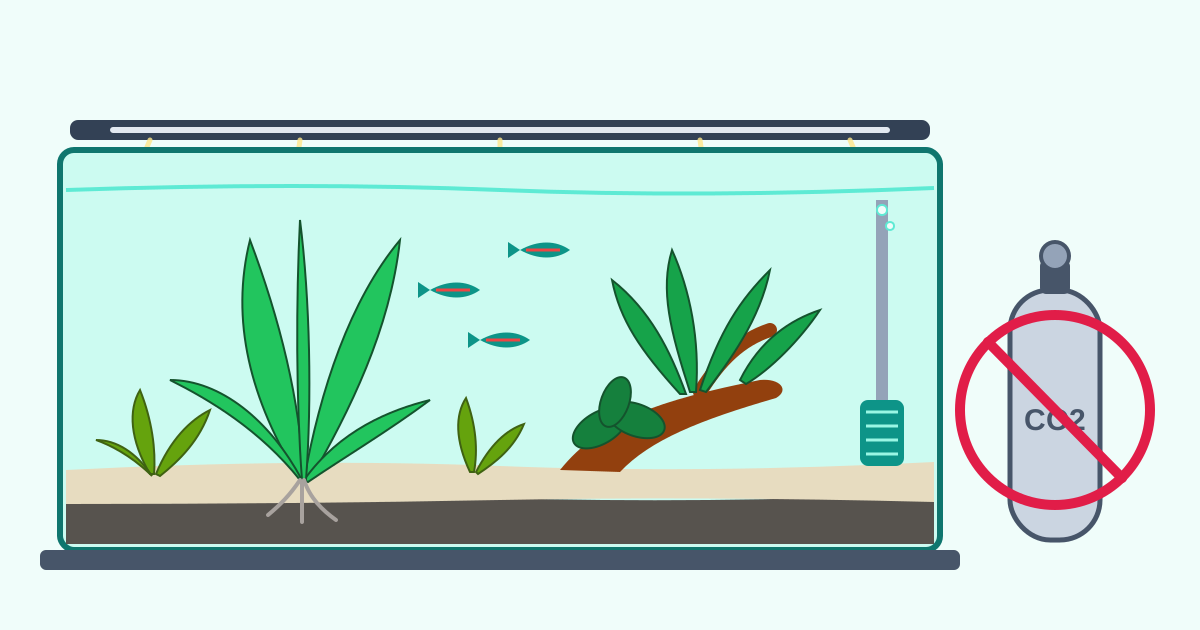
A low-tech planted tank is an aquarium that grows live plants without injected CO2 and with moderate light. The recipe is simple: easy, slow-growing plants, a moderate light, a nutrient-rich substrate or root tabs for rooted plants, gentle flow, and only a few small fish. Expect slower growth than a CO2 tank — in exchange you get less trimming, less equipment and more room for error.
This guide covers what you need, which plants to pick, the weekly routine, and the points where The 2Hr Aquarist, Buce Plant and Aquarium Science disagree — fertiliser, lighting hours and aeration among them.
What "low tech" actually means
Every definition starts with no injected CO2. After that they differ:
- Buce Plant defines a low-tech tank as one with no CO2 injection and no added fertilisers.
- The 2Hr Aquarist still recommends an all-in-one fertiliser in a low-tech setup, and compares low-tech to coffee made without an espresso machine: different, but just as good.
- Aquarium Science describes the typical low-tech tank as a beginner setup — gravel or sand, the light that came with the kit, a few small fish — where some plants die back, some come back and some take off. It estimates that about three-quarters of planted aquariums are low-tech.
If you want to know what injected CO2 involves before ruling it out, the aquarium CO2 guide covers pressurised, DIY and liquid carbon.
Low tech vs high tech
| Low tech | High tech | |
|---|---|---|
| CO2 | None injected | Pressurised or DIY CO2 |
| Light | Moderate | Bright |
| Fertiliser | None to light, often a nutrient-rich substrate | Regular and heavier |
| Plant growth | Slow | Fast and dense |
| Plant choice | Hardy, slow growers | Wider, including more demanding plants |
| Upkeep | Less trimming, more forgiving | More trimming, less margin for error |
Low-tech planted tank setup checklist
Tank. The 2Hr Aquarist suggests a shallower tank such as a 20 gallon long or a 40 gallon breeder, because tall tanks are hard to light and hard to aquascape. It also points out that lighting and hardscape usually cost more than the tank itself. If you're choosing a tank, see our 20-gallon tank picks.
Light. Aim for moderate light. The 2Hr Aquarist suggests 30–50 µmol as a starting point and notes that brighter light leaves less room for error with algae. Buce Plant goes further: it calls too much light the main cause of algae, especially in low-tech tanks where plants get no fertiliser or CO2. The planted lighting guide covers hours and PAR, and our planted light picks cover what to buy.
Substrate. The 2Hr Aquarist's advice is to go for soil: aquasoil, or a cheaper mineralised topsoil capped with sand, because it holds a long-term store of nutrients and most rooted plants grow better in it. Plain sand or gravel works too if you feed rooted plants with root tabs. Aquarium Science notes that soil also adds CO2, which helps growth in a tank with no injected gas.
Fertiliser. This is where the sources split — see "Where the sources disagree" below. If you do dose, follow the product's label; this page doesn't set doses.
Filter and flow. The 2Hr Aquarist suggests a filter that turns over 6 to 10 times the tank volume per hour, with an outlet that moves the surface and mixes it with deeper water to improve gas exchange. Aquarium Science suggests low-flow filters and little or no aeration (more on that below).
Heater. For tropical fish and plants, The 2Hr Aquarist calls 22–26°C ideal for most planted tanks.
Stocking. Buce Plant says to cycle the tank before adding any fish or shrimp — see how to cycle an aquarium. Aquarium Science's one rule for low-tech tanks is to keep only a few small fish.
Free tool
Filter turnover (6–10x per hour) and fertiliser or root-tab labels all work from your tank's volume. Work out the real number first.
Aquarium volume calculator →Easy plants for a low-tech tank
| Plant | Type | Notes from the sources |
|---|---|---|
| Anubias | Rhizome, attach to wood/rock | Very easy and very slow (Aquarium Science); keep the rhizome out of the substrate |
| Java fern | Rhizome, attach to wood/rock | Very easy (Aquarium Science); bury the crown in sand and it dies |
| Bucephalandra | Rhizome, attach | Buce Plant's favourite low-tech plant; slow (Aquarium Science) |
| Java moss and other mosses | Attach | Very easy (Aquarium Science); listed by Buce Plant |
| Cryptocoryne | Rooted | Dies back when planted, then comes back (Aquarium Science) |
| Amazon sword | Rooted | Very easy, dies back at first (Aquarium Science) |
| Vallisneria | Rooted | Listed as easy by Aquarium Science |
| Hornwort, Amazon frogbit, water sprite | Floating | Easy, fast-growing floaters (Aquarium Science) |
| Monte Carlo | Carpet | Buce Plant's suggestion for an easier carpet |
The 2Hr Aquarist adds a useful rule of thumb: stem plants grow faster, need regular pruning and soon shade shorter plants, so leaning on rhizome plants and other slow growers keeps maintenance down. Aquarium Science notes that some stems it lists as easy, such as Bacopa and Rotala, become "leggy" without plenty of light.
Looking after it
Buce Plant's low-tech nano tanks all get the same routine:
- a 20% water change every week (it recommends 15–25% weekly, rather than larger changes once a month);
- feeding twice a week;
- topping up with dechlorinated water as needed;
- wiping the glass with an algae scraper every two weeks;
- rinsing filter media in old tank water at least every three months.
Watch the new growth rather than the old leaves to judge how the tank is doing. If leaves start yellowing, getting pinholes or coming in pale, the plant nutrient deficiency guide explains what to rule out first. If algae appears, look at the light first, given Buce Plant's warning about too much light — and if it's black tufts on leaf edges, see black beard algae.
Where the sources disagree
- Fertiliser. Buce Plant runs its low-tech tanks with no fertiliser and no CO2. The 2Hr Aquarist says relying on the substrate, tap water and fish waste is "unreliable at best" and recommends a regular all-in-one. Our take: give rooted plants a nutrient-rich substrate or root tabs, and add a liquid fertiliser at the label dose if leaves show it's needed.
- Light hours. Aquarium Science describes its typical low-tech tank as moderate light (5 "true" LED watts per ten gallons) for 16 hours on, 8 off, and says none of its parameters are fixed. The 2Hr Aquarist talks in terms of moderate intensity, and Buce Plant warns that too much light causes algae. The sources behind our lighting guide suggest about 6–8 hours a day, with Aquarium Co-Op going up to 8–12 once plants are established — still well short of 16.
- Aeration. Aquarium Science says low-tech tanks usually have no aeration or a very weak air stone, and describes Java moss dying back after an air stone was added. The 2Hr Aquarist recommends surface movement to improve gas exchange. Gentle surface ripple without vigorous bubbling sits between the two.
My own low-tech tank
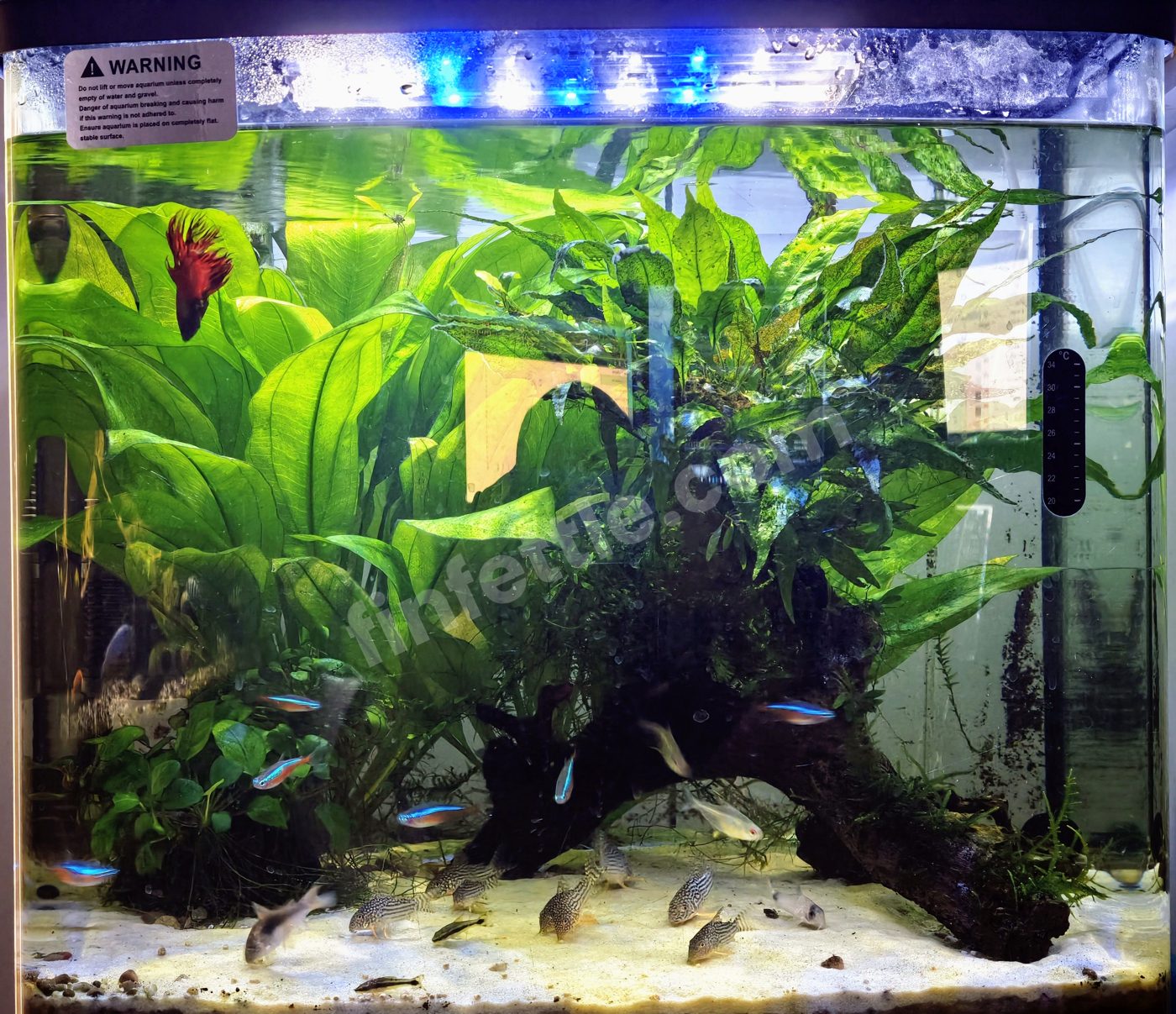
My 90-litre planted community tank is a low-tech tank. It's a Love Fish Vantage aquarium from Pets at Home, and I still run the light it came with: three LED strips, a mix of blue and white. I've never run pressurised or DIY CO2 on any of my tanks. It grows two Amazon swords, an Anubias nana on a coconut shell and a Java fern on driftwood — the kind of easy plants the sources above recommend — over a layer of Seachem Flourite under fine white sand and pebbles, and I've added Tetra InitialSticks to the substrate for the swords. It shares the tank with tetras, corydoras, a red crowntail betta, Amano shrimp and Malaysian trumpet snails.
With a plenum under the substrate and the plants doing their share, the 90 L doesn't need frequent water changes: I change about 25% of the water every fortnight and vacuum the sand each time. No plant has died out on me in this tank.
I changed the lighting hours because of black beard algae. The light now runs from 09:00 to 14:30 and again from 16:30 to 22:30, and the change helped. I've used Seachem Flourish Excel occasionally — when a tank is first set up, and against black beard algae — but that's liquid carbon, not CO2 gas.
My Juwel Trigon 190 started out planted too. From around 2020 it gradually stopped being planted, for two reasons: the substrate had no nutrient-rich layer, and I added parrot cichlids, which can destroy plants. That first reason is the same point The 2Hr Aquarist makes about choosing soil for a low-tech tank. In that first setup the Amazon swords slowly faded in the thin, nutrient-poor sand bed, and because I rarely dosed liquid carbon or added root tabs, every plant in the tank eventually died off.
Apart from my own water-change routine, the light levels, plant lists and routines on this page come from the sources cited, not from measurements I've taken on my tanks.